What if the peace you’re searching for isn’t something you achieve by changing your circumstances, but something you discover by turning inward?
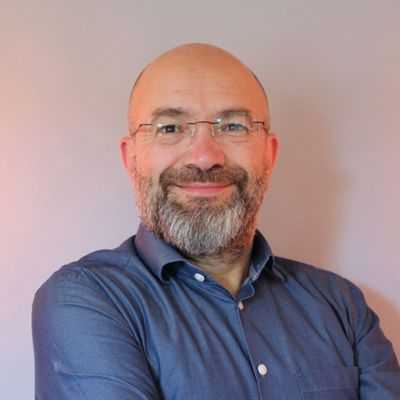
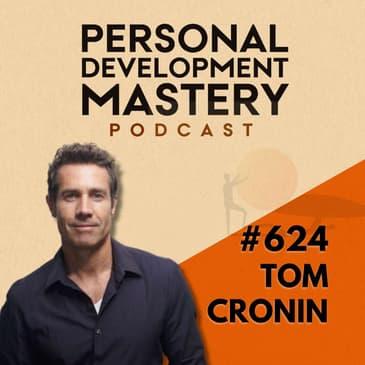
In this episode, meditation teacher and filmmaker Tom Cronin returns to explore how meditation can transform the way we experience life beyond the moments we spend sitting with our eyes closed.
If you feel overwhelmed by the constant noise of modern life, caught in repetitive thought patterns, or constantly chasing the next achievement, this conversation offers a powerful perspective on finding inner stability, clarity, and fulfillment.
How a consistent meditation practice can create greater presence, emotional balance, and peace in everyday life
Why chasing external success and experiences often leaves us feeling unfulfilled, and how to shift toward a deeper sense of inner fulfillment
How silence and stillness reveal hidden patterns of the mind, helping you become aware of your thoughts rather than being controlled by them
Listen to this episode to discover how meditation can help you cultivate lasting peace, transform your relationship with your thoughts, and live from a place of deeper fulfillment.
˚
KEY POINTS AND TIMESTAMPS:
01:01 - Welcoming Tom Cronin Back
02:49 - Evolving and Measuring a Meditation Practice
08:26 - Real-Life Changes Meditation Creates
10:48 - Equanimity, Peace, and Moksha
13:49 - Volition: The Intention Behind Every Action
15:24 - The Ego's Endless Quest for Fulfillment
20:44 - Finding Inner Fulfillment Through Meditation
23:32 - Hidden Patterns and Awakened Senses in Silence
32:06 - Cultivating Peace in a Turbulent World
36:39 - Trust, Fear, and Closing Reflections
˚
MEMORABLE QUOTE:
"We can't wait for things to be peaceful for us to find peace. We have to learn how we can cultivate peace whilst we're in a very unpeaceful world, an unstable world."
˚
VALUABLE RESOURCES:
Tom's website: https://tomcronin.com
˚
Previous podcast conversation with Tom Cronin on episode #336: https://personaldevelopmentmasterypodcast.com/336
˚
Coaching with Agi: https://personaldevelopmentmasterypodcast.com/mentor
˚
🎙️ Want to be a guest on Personal Development Mastery?
Message Agi on PodMatch: https://www.podmatch.com/member/personaldevelopmentmastery
˚
Personal development podcast for midlife professionals, offering actionable insights for personal growth, mindset tips, self mastery and purposeful living.
˚
Subscribe to our weekly email: https://personaldevelopmentmasterypodcast.com/email
---
A personal development podcast for midlife professionals, offering mindset tips and practical tools for personal growth, self mastery, personal mastery, and purposeful living. Discover psychology tips for emotional intelligence and growth mindset, including overcoming impostor syndrome and building self mastery.
Personal Development Mastery features personal development interviews and solo episodes empowering professionals, entrepreneurs, and seekers to cultivate self mastery and create a meaningful, fulfilling life aligned with who they truly are.
Agi Keramidas
(1:01) Today I'm delighted to welcome back to the podcast Tom Cronin. Tom, you are a meditation teacher, transformational coach, author and filmmaker. Great to have you back, Tom.
Tom Cronin
(1:17) It's a real pleasure. I was looking forward to this conversation. I really enjoyed our last time we were chatting, so I was looking forward to having another one of those deep spiritual conversations.
Agi Keramidas
(1:27) I also enjoyed our conversation very much. And just to bring that back to from our memory, it was about three years ago, I wrote it down to episode 336. And we talked about your personal journey, your turning point, meditation, spirituality.
And I do remember there was one thing that you said that stayed with me, that you realized at some point that the problem was not your job, what you were doing, but your inner state. And I remember that because we talked a bit about that. But today I want to explore more meditation with you, stillness, and even perhaps more importantly, the effects that practicing meditation has in one's life, in one's decision making, in one's relationships, in one's work, and so on.
So there are many directions that we can go. But what I would like to start with, Tom, since it's been three years or around three years since we spoke, looking back, how has your own meditation practice evolved these last three years?
Tom Cronin
(2:49) What a beautiful question. My meditation practice for 30 years has been very structured, which is for 20 minutes twice a day. I park some time to sit in a chair, close my eyes, repeat a particular mantra.
So I do Vedic meditation, otherwise known as Transcendental Meditation. And it's I really like that structure that comes with that practice. It just fits well into my day and the way I live my life.
And so for 20 minutes twice a day, I've done my meditation, sitting in a chair, closing my eyes, repeating my mantra. But it has evolved. And what it has become more of these days is definitely still that I just had a meditation about an hour ago.
And it's a really special time in my day that I look forward to deeply to have that time in meditation. But it has become more of a 24 seven experience now where I feel that I'm in a constant state of watching, witnessing and being present with my thoughts, my words, my actions. And I think this is what meditation helps us achieve over time.
And this is the importance of having a regular consistent practice is that what we cultivate in our meditation eyes closed experience, we start developing simultaneously as time goes on in our eyes open experience as well while we're driving the car while we're having conversations while we're eating food. And I think this level of presence and mindfulness and in Sanskrit, we call it Sakshi Kutashta, the silent witness, the silent witnessing is a really important step in the human experience to be able to witness and not react all the time.
Agi Keramidas
(4:31) I like the word cultivate that you use and it is something to be cultivated and practiced. I want to, the way you were describing it, the question that came to my mind and which I'm sure that many people who meditate regularly have is that it is difficult or it can be difficult to realize if one is progressing on it. So they may be sitting and practicing and meditating regularly or daily for a long time.
But it can be difficult to see, am I doing any progress with it or is it a routine that I keep on doing? And yes, I cultivate it, but I'm not sure what has come out of it. So I suppose it is a common question that you encounter as a meditation teacher.
So I would love to hear your thoughts on it.
Tom Cronin
(5:32) We're a very goal oriented species. I need to get the partner, I need to get the job, I need to get the kids, I need to pay off the mortgage. And we're generally designed to look onto the horizon to be able to measure some form of success.
And our identity is very much what I call this sort of success measuring rod. What grades did I get at uni? And what was my income?
And how many kids did I have? And what's my superannuation? So we generally tend to apply that to our spiritual practice as well.
I see people almost competitively in their yoga classes or how long they can be in their breath holds, in breath work, and how still can they get in their meditation. But the way I see it is this, it's not the practice that we really should be putting our attention on. Your meditation, I have busy meditation sometimes, I have quiet meditation sometimes, have uncomfortable meditation sometimes, have deep sleepy meditation sometimes.
The meditation experience themselves haven't really changed that much in 30 years. Sometimes they go a bit deeper, sometimes they're a bit shallower. But what we really want to do is we want to start considering and exploring not just who are we, but more importantly, what are we.
And humans like to be defined by who we are, how much money we have, how many kids we have, and who we're married to, and what type of job we have. But I'm more interested in what we are. And what we are is something that is always the same.
We're always enlightened, we're always the divine, we're always this Sakshi Kutastra presence being. We're only ever really ultimately that. It's just that we get very identified with the who are we, and our thoughts, our feelings, our relationship with the world around us.
And so meditation is a pathway, a process to start to connect with what we already are. We don't get more from meditation, we simply become less of what we think we are. We call this Pragyaparada, the mistake of the intellect, we're slowly refining the intellect to no longer be in this illusionary, perceived identity that we think we are.
And with meditation, consistently, we start to discover more and more that we're not that, we're actually something that we always were. And that's the what we are. And that's where I think for me meditation is really, when I'm checking in with my students, I don't check in to see how their meditation is going, I'm checking to see how they're going, what their experience of life is, because that's the thing that changes the most, not the meditation practice, but what's happening outside the meditation practice.
Agi Keramidas
(8:11) Give us an example of some change, some actual change in behavior or thought pattern or whatever it is that you have heard one of your students do as a result of it.
Tom Cronin
(8:26) Look, most of the initial changes that I see people having is firstly, people that haven't been sleeping very well start sleeping well. And that's because sleep is really struggling to provide what they need. And that's because they have a lot of cortisol and adrenaline in their blood.
Particularly when they go to sleep at night, their mind's ruminating, there's still a lot of cortisol. And so with the meditation taking a lot of the heavy load of the allostatic load, that's the stress that's built up in their body, it allows sleep to work more efficiently. So we see people sleeping better, people become less emotionally reactive to life.
So that means that this emotional upheaval or fluctuations that people go through, based upon circumstances and situations that they're relating to in life, there's a more consistent state that is able to be present during those circumstances and situations without this incredible peak and trough undulation. And look, this can be challenging for some people because they're still looking for those highs, you know, and this is the challenge with going into the meditation practice is that those lows will definitely be reduced, but the highs will also be reduced, we get more of an equanimity happening in our day to day experience.
Agi Keramidas
(9:42) Equanimity, I was about to say that when you describe the more consistent state and not having so much peaks and troughs, so thank you for bringing it up, the equanimity and how, because I think when I, my understanding now of equanimity especially, and I will bring that the conversation there very soon, but especially since my retreat, my Vipassana retreat I did recently, my second one, I have come to understand much more about the importance of equanimity in what, in our life in general and in our experience of life, but also, you know, the consequences, I will use that word, of lack of equanimity when we behave, you know, on autopilot or in ways that we do not want to be behaving and so on, so yeah, glad you brought the term equanimity up.
Tom Cronin
(10:48) You know, equanimity, to help people understand more simply what that means, it means peace, it means to have more peace, peace is the absence of undulations, it's the absence of fluctuations, it's the absence of motion and if you think, if you look at a peaceful ocean, one would say that there's simply less waves, that's all there is, there's less waves which means it looks more peaceful, a peaceful lake is not moving and so when we cultivate through meditation an unmoved state of awareness, then we simply as a default to that have more peace and also there was a beautiful interview with Stephen Bartlett from Dairava CEO, interviewing a Buddhist monk and this interview segment went very viral, this one question, Stephen Bartlett asked the Buddhist monk something along the lines of, are you happy? And the Buddhist monk said, I'm not looking for happiness, happiness comes and happiness goes, happiness is a reaction to circumstances and situations that are good and not bad, but what I'm looking for is peace, peace allows me the freedom to be in those circumstances and situations and not craving the outcome.
Agi Keramidas
(12:11) I have seen that video indeed, actually multiple times so and it is a great realization or understanding that what you just said that happiness will come and will go, sadness will come and will go and things in life will come and go, that's how life, there is a constant flow, everything is changing and being able to observe that and have that peace and not being moved around with all those events is the way that I see it anyway, it is something that will completely ground your life and you are able to live in a way of starting from a much calmer place. Yeah, I was going somewhere else with it, but anyway.
Tom Cronin
(13:15) We call this in Sanskrit moksha, m-o-k-s-h-a, if anyone's wanting to deepen their Sanskrit understanding, moksha, it's such a beautiful word, one of my favorite words in Sanskrit, which means to be liberated from the binding effects of life, so that the effects of life, we're not bound by them, we're not attached to them and we're not disturbed by them and so moksha is this state of peace, it's a state of freedom.
Agi Keramidas
(13:49) I mentioned earlier that I did recently a Vipassana 10-day silent meditation retreat, which was very insightful, as you would expect one to be, and it was not, I was just telling you, it was not easier than the first one, as I thought that okay, now I know what to expect, but I will tell you this and I will ask you, because I think it was, for me it was the biggest insight I had during those 10 days and that was the difference between what we do or the actions that we take on a physical level and the deeper intention or the mental action that precedes that external action, that volition, that internal motivation of doing, so I had quite a big insight about the difference between how everything, all the external action that I do starts with an internal action, with the volition and I can do the same exact external action with very different volition inside, so that external action might look the same, but it's really not the same and therefore its results won't be the same, so I would love to hear your thoughts of the importance of this volition, of this inner intention that we take in meditation and in our life in general.
Tom Cronin
(15:24) Such an important conversation, the way I see it is that every human on the planet right now, their volition predominantly, for most of them anyway, is the quest to find fulfillment, so we're operating from an egoic identity, that's thoughts, feelings and physical form, this seeming apparatus that we have, most people buy into the idea that that's them, I am my thoughts, I am my feelings and my physicality, but that egoic identity, thoughts and feelings will never find fulfillment, it's just the innate characteristic of the ego, the identity, the personality, it is always craving more, no matter where it is, it will never find what it's looking for and I'll give you an example, I had one of my clients, he wasn't a client at the time, he was someone that I didn't know about, but he was told by a friend of his to reach out and contact me because he was in a really bad way and he'd sold his business for 350 million dollars, he bought a 50 million dollar palatial mansion on the Amalfi coast in Italy, he filled his carriage with five of his luxury favorite cars, had butlers, chefs, maids, cooks, cleaners, he could never spend his money, even if he tried, he gave it a good nudge, had wife, kids, everything was the epitome of what you would want to achieve as success in our world and the reason why his friend told him to contact me is because he was suffering from a really deep depression, he was riddled with anxiety and in his words which he said to me in our first intro talk, intro call, was that he doesn't understand why but he's never felt as angry as he does, it just doesn't make any sense and I said well, you've done the quest, you've done everything you're supposed to do which the world told you to do to find fulfillment, the problem is your ego will never be complete, no matter what you have in the world, it will always want and crave more and so our volition for most humans is to keep looking for more, to go to the Ikea furniture store, to go to the supermarket, to go to work, to go to the gym, to go to the movies, to watch some porn, to take some cocaine, to drink a beer, you know, we're constantly looking for an experience that will give us a sense of fulfillment but we can't ever get to that particular point, it's like the gold under the rainbow just keeps moving and so that's what we call outcome-oriented fulfillment, it's a constant quest that leaves us always in a state of discontent but what we want to do is we want to look at self-referred fulfillment, this is a fulfillment that arises from within, this is something that bubbles up in from the essence of our true nature which is some would call it the divine, the higher self, God, source, the creator and it permeates and pervades all reality which means that it can only be us and as we meditate more and more, we start to realize that this is our true essence, this is our core and when we start cultivating more of this inner fulfillment, we start finding that our volition, our motivation, our compulsion into action comes from that place of fulfillment so action for fulfillment is very different than action from fulfillment and what we're cultivating here and we see this time and again with people that cultivate more of that deep connection of that blissful state within them which is their true nature beyond their thoughts and feelings, then we start to see their action become one of contribution, they start to find I've got this overflow that I want to share and then from there, they go on to stages, they write books, they run retreats, they coach people or they create communities to give back or they build charities and self-help programs and things like that so this is a natural progression where we start to reduce the association identification with an ego that will always be craving and want more to the true part of themselves which I call the higher self with a capital S and from that, it has in itself an overflow of completeness and wholeness that it wants to then use your vessel, your lower self as the custodian of the higher self to be the channel to convey that knowledge and that wisdom and that love and that fulfillment.
Agi Keramidas
(19:44) Thank you for this answer Tom and you know the way you describe that place of the self-referred fulfillment as you said and I also liked very much you said driven from fulfillment not for fulfillment and I believe a very important distinction. My question that comes very naturally with this is how can one go to that place more so that then as you said the field of contribution comes naturally, it is driven, you just do things as a vessel as you said, you just operate with the greater good in mind but the question is coming back before that, how can one operate from that place more, how can I connect to that place more?
Tom Cronin
(20:44) There's a beautiful quote by Maharishi Mahesh Yogi who's a phenomenal sage and pundit from the Vedic tradition and he says in this quote, no one needs to suffer in life because there's an ocean of bliss within everyone and the thing with that level of bliss which would also be I guess an essence of love, maybe enchantment, glee, the essence of that is not found outside of us, we can't get it in Netflix, we can't find it on a podcast, we can't find as good as its podcast is but we can't find it in a book, we can't find it in a dating app, in a line of coke or can of beer, so we have to go and look where it's not and it's not out there, so that means it must be inward and we have to have that inward inflection, that inward journey and that really the only place, the most accessible I must say to go into that field is through meditation, I believe there's other pathways, plant medicine, I think breath work, I think to some degree yoga, I think qigong, I think healing modalities, I think there's an array of entry points into that field, I find meditation to be the least turbulent and the most accessible, I can't go into an ayahuasca ceremony and then turn up to work half an hour later but I can go into the boardroom, transcend duality, transcend ego and go inward to that stillness and silence where that fulfillment resides and then take that essence and then go into a boardroom, into a trading room floor, into a meeting or back to doing my spreadsheets and bring some more of that and so this consistent morning and evening, morning and evening dipping into that field, coming back into the outside world, going back into the inside world and back into the outside world, now sleep doesn't quite cut it because sleep isn't a conscious inward journey, it's an unconscious journey so we're not conscious in that, we're unconscious in deep sleep and then we're in dream state which is thinking state, so it's a state of thinking in some ways but we're asleep so the way to access it in unconscious ways, I believe meditation is a really important step in that and only some meditations, if you're listening to Matthew Mcconaughey in the car map reading you bedtime stories, it's a nice meditation, it will help you sleep better and there's nothing wrong with that but I don't think you're going to get into that deep transcendent state of accessing that field.
Agi Keramidas
(23:32) We actually, I remember that we talked about that on the first conversation and you were describing which types of meditation can lead to that state so it is always a good reminder and I will refer anyone interested in that to listen to our first conversation. Tom, there is one other thing since I started bringing up my Vipassana experience which was very recent, there is one other thing that I realized very much especially now being for the second time that there are some let's say patterns in my mind that they were not visible in a way because of the noise of everyday life but they were there, they were operating and what I realized very much with the silence was that these patterns came to the surface and some specific patterns repeatedly to the surface and because there was nothing for me to distract myself with or my mind with, I had to face it so I would like to hear your thoughts on these hidden patterns that can come up to surface either with a silent retreat or even with meditation with any of those spiritual practices and the realizations that one can have with saying oh this has been with me all along and I'm just looking and seeing it now clearly.
Tom Cronin
(25:13) Yeah you know it's interesting you discovered these repetitive repetitive patterns or we call them in Sanskrit vasanas, tendencies of the mind, neurological patterns of behavior and the thoughts and we were chatting before we went live about this retreat that I was running yesterday for the last few days, a five-day retreat in New Zealand and the theme that I ran with that retreat was this idea of being silent so we can listen and the word silent and listen have the same letters and we can't listen if we're not silent and one thing that I find quite fascinating which is your experience right here right now talking about it is that in the silence you were able to listen to your mind rather than be your mind, you were listening to your thoughts rather than being your thoughts and that discrimination is a really important step in our evolution in freeing ourselves of codes and constructs and it kind of scares me and disturbs me sometimes when I am able to see and hear my nature of my mind it's like wow I can't believe I'm still thinking that and we don't realize how limited and confined and constrained our thought processes are they're so repetitive that we just keep going in these recurring loops time and time again and this is why on our retreats we do some really expansive programs to help liberate us it's not just about silencing the mind it's then about working with the mind and using that vehicle as a device to accelerate and propel ourselves into action and this comes back to that volition we get very clear about using your thoughts not being used by your thoughts and that's the big difference but we need to be silent first to see what are the thoughts that I want to have and what are the thoughts that aren't serving me anymore and how do I distinguish the difference and then start to change the nature of my mind and that's something that we're really starting to explore as humans The Brain That Changed Itself by Norman Doidge talks a lot about that we can have a malleable mind that's adaptable and changeable.
Agi Keramidas
(27:22) Definitely, and that's in many ways it's the starting point of change, because if you accept the opposite, that it's not malleable and that it is what it is, then there is little that can be done to help that. I liked very much, you know, and I hadn't considered that listen and silence have the same letters. I was actually looking and I wrote it down and I wanted to confirm it.
Tom Cronin
(27:53) I have to do the same.
Agi Keramidas
(27:57) Yeah, but it is, and the way that you say it, it makes perfect sense, because the only way to listen, to really listen, you know, is to pay attention by being silent. If you are, if you already have a chatter going on inside, it is very difficult to listen at least the nuances, the details of what it is that you listen, you know, like the gross picture or sounds of it. I found myself during the retreat listening to the birds, listening to the sounds of nature, and I would pay attention to it.
They're there all the time, the wind blows through the trees all the time, but I don't hear it, I don't listen to it. At that, at the retreat, I would listen to it, I would pay attention to it, because of the silence. So it's a beautiful feeling when you pay attention to things around you, to the present moment rather than being, you know, in that train of thought that most of us are in the majority of our time.
Tom Cronin
(29:04) It's a phenomenon we see happen, and it's a sequential stage that we go through. We recognize this in the Vedic tradition that we call that state, the sixth state of consciousness, and we have seven states of consciousness, and that's one of the more advanced states to get into, where the mind is so quiet. And what comes alive at this point, when there's less cacophony and noise inside the skull, what happens is the five senses that are always providing you information and feedback from the external world that the senses are engaging with, and the senses are only ever in the present moment.
You can remember something that your senses saw or heard in the past, but the fundamental reality is your senses are only ever processing information in the present moment. What I see, taste, touch, hear, and smell is what's happening right now. And when the mind is quiet, these senses get so refined that we really tune into the magic of what's happening around.
And it could be the beautiful reflection of the light globe, it could be the faint lingering smell of essential oil on my skin, it could be the wonderful hum of a distant bird or something like that. And so we start becoming so attentive to this beautiful sensory experience that's around us. And what we're witnessing is not just the beauty, what we're witnessing is divinity playing out before us.
In Sanskrit, we call this lila, L-I-L-A, the dance of the divine, and we're able to playfully interact with this magical, divine exchange between us and the world around us.
Agi Keramidas
(30:41) It sounds very poetic when you say it like that, so thank you for describing it in such a beautiful way. I liked also, you used the word cacophony, which I hadn't considered, but it's very appropriate sometimes with what's going on inside the skull. Tom, I wanted, before we wrap up this fascinating conversation, there were a couple of last things I wanted to ask, but what I want to close this with is for someone who has been listening now to us for half an hour, what is a message that you would like to give to her or give to him after all this conversation?
Because I'm asking that, Tom, because I always believe and that's what I always want to bring with the podcast to the listener, is some kind of inspired action as a result of this. Okay, yes, I've listened to it, I've watched it, it was okay, I learned something. That for me is not enough, that's not why I'm doing this.
Knowledge on its own is useless. What can we do with it? That's when it becomes useful.
With that frame in mind, what would you like to say to the listeners or the viewer of this conversation?
Tom Cronin
(32:06) Firstly, two things. The world we're in is going to become quite turbulent and definitely we will never be free of the challenges. There will always be some challenges in life.
You might think you get to a destination where there's no challenge and your mom will get sick or your dog might get injured or you might lose your job or the financial markets might collapse, property market might collapse. There might be two countries start blowing each other up. There's just constantly something going to go on in our life, which means we will never be able to line up all the ducks and line up everything so that we can finally find peace.
We can't wait for things to be peaceful for us to find peace. We have to learn how we can cultivate a peace whilst we're in a very unpeaceful world, an unstable world. It sounds exactly like you said, lots of words and it's all nice for us to talk about this, but how do we really make this happen?
I really truly believe, which is why I left my career in finance to become a meditation teacher. I created the Stillness Project to inspire a billion people to meditate daily because I see that these emotional upheavals that we all go through are a result of being disconnected to our true nature. Our true nature by default is peaceful, but we have to go within.
We have to quieten our mind. We have to sit in stillness and silence. I would suggest minimum twice a day for minimum 20 minutes.
A lot of people right now are probably thinking, oh, I just don't have time for that. I'm too busy, but we're only busy trying to find fulfillment, which we'll never find anyway. If we just look at your calendar every day and know that your day comprises of 24 hours and each hour has three portions of 20 minutes in it, that means you have 72 20-minute segments of time each day that you're trying to extract fulfillment from.
I would suggest that if you find two unconditionally out of your 72 20-minute segments each day, one in the morning, one in the afternoon, sometime before dinner, between lunch and dinner. Just close your eyes and make this an unconditional commitment to finding an inner peace. Even if the meditation is not enjoyable, even if it's difficult, and if you don't know how to meditate, just contact me.
I can help you with some courses that I run on Zoom or in person. I can teach you how to meditate so that you can just allow that time to be enjoyable, peaceful, and something you actually relish on a daily basis. I think the call to action here is to not get distracted by an external world that is constantly pulling your attention and vying for your eyeballs, but to find sovereignty in this world that is very alluring and look within and puts that time aside for peace and quiet.
Agi Keramidas
(34:50) Absolutely. Tom, where can someone find you and learn more about you and connect with you?
Tom Cronin
(34:57) I love Instagram, so people can find me there. I'm more engaged out of all the platforms that are out there for social media on Instagram. Tom Cronin on Instagram, and they can send me a message.
The other place is my website, which is also tomcronin.com. They can see my retreats and meditation courses and coaching programs there.
Agi Keramidas
(35:19) Tom, I want to thank you very much for this fascinating conversation. Our second one after three years after the first.
Tom Cronin
(35:29) Hopefully, we don't have to wait another three years for another conversation. I enjoyed it very much.
Agi Keramidas
(35:32) I would love to do a trilogy. Yes, in due time, we will do another. Certainly, not three years from now.
What I wanted to reiterate for me, one of the things that stayed with me from this conversation was that distinction about striving for fulfillment and the volition to find, you said the quest for fulfillment, versus acting from fulfillment. That was very, for me, a very important distinction. I'm just reiterating also so I can express myself and understand it and remember it better.
Thank you very much for this conversation. I will leave it to you for your parting words. Anything else, last that you want to share?
Tom Cronin
(36:39) Fear arises in all of us, myself included at times. I used to have a lot more of it than I do today, but it still can arise. I know now, even as it does arise, I know now that fear has replaced trust.
It's one or the other. I'm either fearful or I'm trusting. When I'm trusting the process, when I'm trusting that I'm being supported, then I'm trusting there's a divine intelligence that's holding me in some way, shape, or form.
Yes, sometimes I might not get what I want, but I'm definitely getting what I need, but we have to trust that as well. The thing that I would invite everyone is to just slow everything down and listen and trust the process that we're being supported in some way, shape, or form, even though it doesn't make sense at the time sometimes, but it will become clearer as time goes on. You'll find when we trust, we have less fear.
We can't have joy and glee and love in our hearts when we have fear. It's the other. We must trust, and then that reduces fear, and then that brings up more love.

 5.00 (74 Reviews)