What happens when you achieve the kind of success most people chase, only to realise fulfillment still feels out of reach?
TO WATCH THE CONVERSATION ON YOUTUBE, CLICK HERE.
Many high achievers spend years building careers, businesses, and financial security, yet still sense something is missing. In this conversation, Lee Benson shares why success alone does not guarantee fulfillment, and how creating value in a more balanced way can transform the way you live, work, and lead.
Drawing from his journey as a serial entrepreneur with multiple exits, Lee explains the difference between material success and a deeply fulfilling life. He unpacks his model of holistic value creation through material results, positive emotional energy, and spiritual connectedness, and offers practical ways to strengthen each one.
In this episode, you will learn:
How to create a more fulfilling life by balancing financial success, emotional energy, and meaningful connection
Why focusing on value creation can help you move through struggle with more clarity, resilience, and purpose
Simple daily practices that can raise your emotional energy and improve the way you feel as you move through life
Press play to discover how shifting from chasing success to creating value can lead to greater fulfillment in every area of life.
˚
KEY POINTS AND TIMESTAMPS:
00:12 - From Success to Fulfilment
01:38 - Fulfilment and Holistic Value Creation
06:48 - How to Build Positive Emotional Energy
09:29 - The Value Creation Cycle and Material Success
14:24 - Why Money Alone Does Not Fill the Hole
17:13 - Taking Care of Yourself to Raise Emotional Energy
20:42 - Self-Talk, Control and Emotional Nourishment
24:36 - Midlife Success and the Search for Fulfilment
29:25 - Capable and Moral Leadership
31:45 - Books, Final Reflections and Closing Thoughts
˚
MEMORABLE QUOTE:
"Focus on the value being created."
˚
VALUABLE RESOURCES:
Lee's website: https://www.etw.com/
˚
Coaching with Agi: https://personaldevelopmentmasterypodcast.com/mentor
˚
🎙️ Want to be a guest on the podchttps://personaldevelopmentmasterypodcast.com/mentorast?
Message Agi on PodMatch: https://www.podmatch.com/member/personaldevelopmentmastery
˚
Personal development podcast for midlife professionals, offering actionable insights for personal growth, mindset shifts, self mastery and purposeful living.
˚
Subscribe to our weekly email: https://personaldevelopmentmasterypodcast.com/email
---
A personal development podcast for midlife professionals, offering mindset tips and practical tools for personal growth, self mastery, personal mastery, and purposeful living. Discover psychology tips for emotional intelligence and growth mindset, including overcoming impostor syndrome and building self mastery.
Personal Development Mastery features personal development interviews and solo episodes empowering professionals, entrepreneurs, and seekers to cultivate self mastery and create a meaningful, fulfilling life aligned with who they truly are.
[Agi Keramidas]
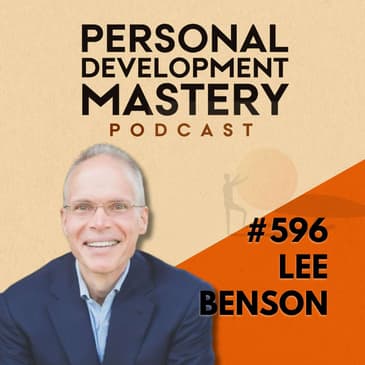
Today I'm delighted to speak with Lee Benson. Lee, you are a serial entrepreneur who built and sold multiple companies, including a nine-figure exit, and later faced a deeper question about what success really means. You now help others move from chasing success to creating value across every part of their lives.
Lee, welcome to the show. It's a real pleasure to speak with you today.
[Lee Benson]
I agree. It's really good to be here. Thank you.
[Agi Keramidas]
I'm very much interested in looking forward to this interesting conversation, and if I were to say something to the listeners that is about to start listening now, I'm looking forward to exploring with you success, fulfillment, and, you know, some things in between that are both connecting them and separating them. So, as a matter of fact, I wanted to begin this conversation by asking you something from your own story about success and, you know, the further fulfillment. So, my understanding is that after you have achieved that financial success that, you know, most people strive to achieve, then something made you question all that and directed somewhere else.
So, I would like to hear, you know, your take on that, you know, shift, if I can call it that.
[Lee Benson]
Yeah, it really is one big journey for sure. What I believe is how we feel going through life is everything, and that probably resonates with all of the listeners and really everyone. They may not know how to articulate it.
They may not know how to intentionally develop that, but it's always been that way for me, and if something doesn't feel quite right, I'm always going back to, well, why is that? And yes, I started eight companies from scratch, and I've had three exits so far, one for well into nine figures. I'm still CEO of two companies.
I love being in the game of creating value, and how I feel while I do it is what's most important, and if I was going to have one internal most important number, it is fulfillment. I believe that's something, if we're doing the right work, it can continually grow year after year without stopping. If we're not doing the right work, it can plateau.
It can actually start to backslide. So, that's my most important number, and when I think about creating value in the world, what has evolved through all of my experience so far is that there's a holistic model in terms of how I think about it, and it's, for me, what's the right balance of material value creation, emotional energy value creation, and spiritual value creation? So, material is super important, and a lot of folks out there these days say, oh, it's not about the money.
It's about all these other things, but when you look at their actions, it's literally 95% about the money, and I would say you're out of balance if you're not looking at emotional energy and spiritual value creation along with it, and so material is important, especially for families. You know, it's challenging out there. You need to make ends meet.
You want to maintain the lifestyle that you want. I believe that positive emotional energy is the scarcest commodity on the planet because it supercharges everything that we do. When it's on a scale from one to ten, if it's on nine or ten, it doesn't matter what happens.
You'll just keep going, and you'll push through it. When it's on zero or one or two, you could get a flat tire, and it could ruin your entire week, so I look at positive emotional energy as the main thing, and of the three, I think that's my strength, the strongest of the three, and then when I get to spiritual value creation, and this has really helped me with my businesses and growing faster, getting higher multiples when I've sold the businesses, it's about connectedness, and so I've always had all these programs just in the context running a company of strengthening relationships between team members, including in the largest company in terms of numbers of employees that I had, I put in a 10,000 square foot gym.
There's about 540 total employees at the time I sold this thing in 2016, and I told everybody, hey, have you trained two days a week for an entire month with other team members, and these classes with certified functional movement trainers will pay 100% of your health insurance the following month. If not, you pay 20%, still a good deal, and if you bring your family members, we'll put even more money in your paycheck, so every day I'm watching dozens of spouses come in, kids programs, all of it, strengthening these relationships, so it was important to me to balance then, and in all of my businesses, the material, the emotional energy, and the spiritual value creation, we always grew faster, we always got bigger multiples when we sold, and this one, just to kind of close it out on the larger aerospace company that was repairing and overhauling parts for aircraft operators globally, we got a 21.6x multiple of EBITDA when it was sold, and this is about a $100 million very profitable business, and other companies in our space at the time, if they got an 8x multiple of EBITDA upon selling, that was really strong, but I believe we got it because of how we were looking at creating value, how we were growing, and the consistent growth leading up to the sale, and the believable story going forward, and the right strategic buyer, there's a lot that goes into it, but wow, was it a cool experience with all of the team members, like that was it for me, and I could even take the next step, people will say, well, don't you miss that, and was that hard for you, like no, if I have a, some people use it metaphorically, you've sold your baby, well no, my baby is this approach to holistic value creation, I've gone from 540 employees to now tens of thousands of employees I'm impacting, if not hundreds of thousands, and growing it globally, that is really cool, it's like a continuation of that work, so the event of making a bunch of money on that sale, when I had previous sales, I was totally fine before then, that wasn't the big event, it was, wow, what did I learn, and how can I now scale this out into the world.
[Agi Keramidas]
I would like to go back to one of those three that you mentioned about the positive emotional energy, and specifically what I would like to ask you, because you were saying that it was, it is your strong point, I don't think, that's my own way of describing how you said it, for someone that's listening now and saying, you know what, Lee, that's really not my strong point, what would you suggest or invite them to work towards perhaps, or to do?
[Lee Benson]
Yeah, I think we should get good or become capable in all three categories, material, emotional, and spiritual value creation, and find the right balance. Now, when you think about the times where you were super energized and really passionate about doing something, whatever it is, it doesn't matter, it could be a hobby, it could be work, it could be anything, you know, events with family and all of it, during those times, I believe we have really high emotional energy, we're curious, we're present, all that's happening. So for me, it's about cultivating that.
To say positive emotional energy is not my strength, well, you know what it feels like when you're super energized to do something, even if it happens infrequently. So how do we make it happen more frequently? So be aware of it, and kind of walk through all of that.
And I do remember a time where, when I look at the family environment I grew up in, it was very negative. It was toxic, it was dangerous, a lot of bad things, and I couldn't wait to get out of it. I was kicked out of the house the beginning of my senior year in high school, the best thing that ever happened to me.
Yeah, I spent one night in my truck, but I found a roommate the next night, I was good. And getting away from that negative energy was amazing, and I felt bad for my parents and my siblings that they were in that emotional space, and I even realized by then it wasn't about me, and they've struggled their entire lives with it. But I started even back then intentionally working on, I want to feel better, I want to have a higher level of emotional energy, so everything is more interesting, and I am more passionate about the things that I do.
So for somebody to say that's not my strength, well, it can be. And I think it probably should be a goal for everyone, because it energizes and supercharges everything that you do.
[Agi Keramidas]
Definitely. Thank you for this answer. And in a similar way, I also want to ask you about something practical a listener can do to improve their, the first stage, their material success.
I know as broad as this question might be.
[Lee Benson]
Yeah, actually, I've got a sort of a simple model in how I think about it. I call it the value creation cycle. And I often say, hey, I got my start when it came to material value creation, pulling weeds at six years old for 25 cents an hour, I'm riding my bike down the street, a neighbor didn't know her unsolicited stops me and says, Would you be willing to do this in my garden?
And I said, Well, of course. Now, back then in the mid 60s, you could get, you could buy two candy bars and have change with 25 cents. So that was, but mostly what I remember about is that felt so good.
You know, my family, low income, no judgment, just they struggle. That's okay. A lot of families do.
But this was something I could trust outside the family. And I was trading my best efforts for this neighbor's accumulated best efforts, you know, her money, and I got paid for it. And then I thought, well, what else could I do?
And then next thing, I'm shoveling snow, because I grew up in Spokane, Washington. And I'm making 50 cents in 30 minutes. And I've just gosh, I've just fourfolded my money.
And then I've got a paper route, multiple paper routes, dishwasher, busboy cook, by the time I was kicked out of the house. It was a non event for me to afford my lifestyle and do all of that. But the way I think about the value creation cycle is I would identify a capability, I would struggle to be capable on that.
And then I would use that to create value. And that elevated my self esteem. And I kept taking bigger and bigger steps.
So as a kid, I was doing it, I couldn't articulate it back then I just knew it felt really good, because it was something I could trust in the real world trading my value for the accumulated value of others and in terms of their money. And then in the first half of the 1980s, I played in a rock and roll band, I played guitar and sang and made most of my money. The first half of the 80s doing that played over 1000 shows within those five years, it was so cool.
It was like a business, I don't count it as one of my businesses, because we had a sound crew, light crew, manager, you know, all of it. And then fast forward, now here's a business, another business, and I just kept taking bigger steps. And I believe once we get on that track, and we're creating our own momentum going forward, it becomes really difficult to get off because it's, it's fun, it's rewarding, it's fulfilling, we're accomplishing challenging things.
And along the way, I learned to really value struggle, like we don't develop without effort. And another word for that could be you're struggling and micro struggle to something really significant. There are healthy struggles, there's unhealthy struggles.
But out of all of it, there is value to be gleaned that can be applied to create even more value in the future. And so getting on that track early for me, and I just keep taking bigger steps. I'm loving the game now.
And isn't it interesting, Auggie, when when people ask questions like, well, why are you still doing this? You made enough money, you don't have to work? Is the goal not working?
Is the goal not creating value in the world? Is the goal not leaning in and doing something? Like that doesn't sound interesting to me at all.
It just doesn't. And it doesn't have to be a business, it could be community, it can be all kinds of stuff, right?
[Agi Keramidas]
Whatever it is that fills one's heart and fulfills the greater, you know, contribution, because we're here our spiritual needs is to grow and to contribute. So I completely agree with you that, you know, the concept of retirement, as we probably have been taught, it is not about, you know, not doing anything, just receiving the money and, you know, not doing nothing like that. Anyway, I don't want to go there.
But I wanted to come back. You know, I hinted that in the beginning of our conversation about success on one side and fulfillment on the other side. What I wanted to ask you is, you know, you have, let's say, gotten the success first, and then the achievement.
You did say it is a journey and it not happen necessarily like that. But what I wanted to ask you is, do you think there is some element of the achievement that you have understood and you could probably could not have learned without being successful first? And I hope my question makes sense.
[Lee Benson]
Yeah, it does. The way I think about what's most important for me, just in life, like the purpose of life, as I look at it, is to elevate human consciousness. The more we figure out, the easier things get, the more value we can create, like all of that.
And I believe going through these stages of not having money, you know, struggling around that kind of stuff, which a lot of people do, which is in one way, just a side note, funny to think about, because when I travel the world and look at other countries, not having money here is like being super wealthy in a lot of places in the world. So it's a strange mindset. But struggling through all of that.
And then some people will say, you know, someday when I have a million dollars or 10 million dollars or whatever it is, everything will be amazing. I wish for a month they could just have it to realize that's not going to fill the hole. And so going through all of these stages and fully experiencing it and earning being at each of those stages, that's what develops me as I think about it.
Like we have to lean in, again, be present, be curious, struggle through it. We can't just intellectually understand it. We have to go through it.
And what we intellectually understand about a challenging set of conditions that we're leaning into will feel so different going through. And I've heard a number of your podcasts where your guests talk about that. So being aware of that and just staying focused on creating value.
And maybe that's the biggest lesson for me in all of it. And that's kind of a life hack for me is focus on the value being created. And it doesn't matter what the noise is around it.
People helping you intentionally sabotaging you. All of it doesn't matter. This is what I'm doing.
Are my expectations, boundaries and rules of engagement reasonable? If yes, then keep moving towards it. And there can at the same time coexist this completely separate set of crazy human behavior, emotions and all of it.
Separate and focus on the value and feel good about that. And it can feel bad at the same time because relationships might be blowing up and people are not reacting in a great way. I know I've said a lot there, but that's really helped me plow forward in a value creating way in dealing with both sides of that equation.
Does that make sense, Agi?
[Agi Keramidas]
It does. And I will reiterate the phrase that you said, focus on the value, which I think it can remain as a very practical thing, a very simple for someone to remember going forward. So yes, it did.
Thank you for the answer, Lee.
[Lee Benson]
I want to add another aspect that I use around this. If emotional energy is the thing and we want net positive emotional energy because it supercharges everything we do, I believe that's true for everyone, all of us. The simplest hack, and it can be hard to do, but the simplest hack is taking care of yourself.
So nourish right, your body, your emotions, your self-talk, all of that. Move right, stretch, exercise, go for walks, whatever that is for you. And recover right, get enough sleep and all of it.
And thankfully for me, I got really sick and I had no choice but to be 100% with my diet. And now I'm 100%. I mean, zero processed sugar.
I haven't had, gosh, I haven't had alcohol in 15 years probably. Never really drank much anyway, but zero processed sugar. And as long as I can remember, I drink water, I drink black coffee, and I'm really careful about the coffee that I get.
That's all I drink. And my food is super clean. I prepare probably 95% of all my own meals.
I always shoot for at least seven hours of sleep every night. Between seven and eight is what I go for. I track my sleep score.
I take my blood pressure every morning. I'll be 65 in a few months and I move better than most 30-year-olds. I get up at four in the morning and I play guitar for about an hour and drink coffee.
And then I exercise for an hour and a half to two hours. I'm often listening to wonderful podcasts like yours. It was so, so great this morning listening to a number of your podcasts.
And then I get on with my day and that's kind of my routine. But that hack of taking care of yourself, well, it'll elevate. If you're normally running at a four or five on emotional energy, it'll elevate at two or three points, just that alone, without even doing any self-work.
And then it'll be easier to do the hard self-work going in. How does that resonate with you with all the wonderful guests that you've had, Agi?
[Agi Keramidas]
It does resonate, Lee, because it is a foundation. How we feel, or you didn't say it as such, but the wellness or the the way that our body feels will certainly make a major role to our emotional state, our thinking, or however we will deal with anything that happens. So, I liked how you simply said it, take care of yourself, which is something that many people put aside or leave it for, you know, when something settles or when the kids go to university or, you know, whatever reason one or excuse one might find to, you know, not take care of themselves.
But it is, I don't know if you want to add anything to this particular thing, but for me, it is obviously the foundation, sleeping well, eating well, you know, not abusing or taking poisons. I don't know if you want to add to anything else to that.
[Lee Benson]
Yeah, well, a couple of things. One, I think it's hard because when you're dealing with stressful things, not doing something can become the hardest thing. So, you know, something really sweet or a pint of ice cream at night because you're just emotionally off and you get that little bit of escape or whatever becomes easier than not doing something, but it's not helpful.
And so, I totally get that, I've gone through all those stages, thankfully, because of an illness I wouldn't wish on anybody, systemic lupus. And I'm through that and that's a whole other discussion. I'm 100% on the diet.
I take care of myself and do all of it. But another one, when it comes to nourishing, it's like, what are you telling yourself? What conversations are you having?
Are you an unintentional or unknowing controlled freak around people in your life, your family, people you work with and all of it? And one of the things that I've worked through is, you know, thinking about the folks in my life, I can't want it more than they do. When I work with clients, often I feel like I want their results and I'm emotionally attached to it, or I can be quite easily more than they do.
And that's kind of hard on me when I go through something like that. So, I've worked through that. And when I look at family members, I look at friends, communities I'm involved with, I want to be really supportive of their journey and how they want to create value in the world and be curious about that and let them stumble and make all the mistakes that they're going to make so they can actually develop and learn and become these amazing value creators.
That's a healthier place to be too. So, I think that's really important. If we're going to take care of ourselves physically, it is the foundation.
When I say nourish, right, it's also what we're doing mentally and emotionally. What is that self-talk? And I heard somebody recently say, well, if you heard someone talking to your child the way you talk to yourself, would you be upset?
And they're like, yeah, I would go beat them up or something like that. It's like, well, okay, well, why don't you nourish yourself a little bit better? What are the things you think about when you go to sleep throughout the day, when you wake up first thing in the morning?
But do we think we can control everybody around us and the outcomes for their lives? Or can we be supportive and celebrate their journey and who they're becoming? And I kind of want to go there.
And that's been really helpful for me just to take care of myself emotionally.
[Agi Keramidas]
You know, you were saying about the self-talk and I think most people wouldn't speak to their worst enemy the way that they speak to themselves in their self-talk unconsciously most of the time. So, yeah, being aware of it is very important to change it. Yeah.
Lee, I wanted to ask you also something regarding a big category of people that listen to Personal Development Mastery Podcast. And that is people who are at a, let's say, a mid-level in their life, in their age, I mean mid-life. They have achieved success by, you know, most measures that society or the way they grew up deemed to be.
However, they do feel lack of fulfillment in some way or another. So, I would like you to address someone listening to us right now and in that particular position. You being completely, you know, on a different side of fulfillment, how would you, what would you suggest to this person?
[Lee Benson]
Yeah, I pointed to it earlier, and I feel like in the United States, and it's different in different parts of the world, and just for context, when I had my larger aerospace company, we did business in 60 countries, had about 2,000 customers. I went to at least half of them while we were building the business, and cultures are different, and what's important is different everywhere. Some things are the same, though.
I want to be healthy, happy, fulfilled, take care of my family, all of that, but other cultural differences. When it comes to this, if you're not feeling fulfilled, and you're at this midpoint in your life, you're likely out of balance around how you're creating value. In the United States, it's about the money.
That seems to be the status and everything, what you have. It's like, well, let's shift to putting it in balance. We definitely want to have material value, because we want to maintain our lifestyle.
I like the term financial peace, financial peace of mind, whatever that is. It's important. Is it six months of liquid assets?
If something disrupted your income, you'd be good, and you could figure it out in six months. Is it a year? Is it two years?
Whatever that is. Then what about the emotional energy? What are you doing to intentionally work on it?
Then same thing on the connectedness side. It's like we're more connected electronically, but lonelier than ever. What are we doing to drive community going through?
Now, I think one of the challenges, and you've probably done this before too, Auggie, where we've been in a room, and somebody said, hey, if you could talk to your 16-year-old self or 20-year-old self, what would you say? They go around the table, and they have all these amazingly thoughtful things. That's fantastic.
Now, let's go around one more time. What would you tell yourself back then that you would actually be able to hear? We have to go on this journey to be able to learn it and experience it along the way.
I've read books where, man, there wasn't much value here, and 10 years later, I read it like this is one of the best things I've ever read, because I was in a position where I could actually hear it. I go back and say, if we're having this discussion, I'll ask the question, how do you want to create value in the world? A lot of people haven't really thought about that.
Great. What can we do to move in that direction? How you feel going through life is everything.
Pointing in the direction of creating value for you, I think that's a great place to start, and you absolutely can. The other thing I like to emphasize is that struggle is actually good. I've gone through a of unhealthy struggles, a few, that I wouldn't wish on anybody, and I think all of us do.
Do we wear it as our identity, badge of honor? Are we a victim forever, or do we cultivate what we can learn from that to create more value in the future, even if it's a lot of times, it's just helping others get through similar situations. I've done that.
I think it's really around that. How do you want to create value in the world if you're not fulfilled, and how can you start moving in that direction, and how can you change your relationship with struggle, because that's where we develop. Effort is where we develop physically, emotionally, mentally, spiritually, all the way through.
Those are thought-provoking things. It's not giving them the answers, like live your life the way I think you should, do these five things, and it'll be amazing. Think about how you want to create value in the world.
Let's build from there, and then I go right back to what is the purpose of this human existence. I think it's to elevate human consciousness. The more we figure out, the better everything gets.
Everything's subordinate to that. It's in support of actually doing that. You know you're on the right track when you become more fulfilled over time.
That's my view of it.
[Agi Keramidas]
I like that view, and I second it very much, the way you described it. When you were saying about the question to what they would say to their 16-year-old self, there is also another question that comes up if someone answers that question, and that question is, do you actually practice that yourself, that advice that you would give to your younger self? Many people at that time realized that not quite.
That is also, I think, an important point for someone to figure out something obvious that they can work on themselves.
[Lee Benson]
I agree, and I believe there's many more folks out in the world that are good at talking about something but can't do it. There's a lot of speakers out there that get a lot of money to speak, and they couldn't do the thing they're talking about to save themselves. I think it's to your point, it's really important to be applying this vigorously.
I believe the biggest challenge on the planet right now, and probably has been this way for all recorded history, is we don't have enough leaders that are both capable and moral. When I think about practicing virtue, I want to be able to objectively create measurable value in the world, materially, emotionally, and spiritually, and at least in proportion, push back on things taking value out of the world in each of those three categories. That's how I think about it, and I lean in every day to do it, and that helps me with my internal fulfillment.
But just talking about stuff and not doing it can start to really push into virtue signaling, and let's practice virtue and more of that, and less virtue signaling. I even have a whole category of business virtue signaling that happens within organizations. My purpose, as you and I were talking about before we started recording, at this stage of my life, and I hope I'm around a lot longer, but I want to drive holistic value creation thinking and behaviors out into the world, within families, within non-profits, for-profits, communities, all of it.
I'm thinking about this amazing future for us a thousand years from now when we look at it, if we could just get a view of it. We're out into the solar system, more into the universe, all of it, doing amazing things, not arguing over who's going to be the next elected official in a country. It's like that is not what's most important.
[Agi Keramidas]
To tell that to many, many people who really believe otherwise anyway. For someone who has listened to us talking for the last half an hour, and they want to know more about you, where would you direct them?
[Lee Benson]
Thank you for that. If you want to learn more about the work that I'm doing, my team is doing, go to etw.com, and you can find everything there. I've got a couple of books.
One is titled Your Most Important Number, written for businesses, and another one I released about six weeks ago. It's titled Value Creation Family, and it's about creating a value creation culture within your family. That's really sort of the origin story of why I started a company called Dinner Table, to help families intentionally raise kids that will create value in the world.
We're not even two years into this, and we have over 40,000 parents in our community. I want to take it to millions. I want to really move the needle here on how people think about creating value in the world.
[Agi Keramidas]
Thank you, Lee. Your vision, or at least the bits of the parts that you have shared with us, is really inspiring. From my heart, I wish you to fulfill that vision, because it is for the elevation of human consciousness, as you said.
As I will start wrapping things up for today, there were two, let's say, phrases that I highlighted, and they will stay with me from this conversation. One was the positive emotional energy, and everything that we talked about that. The other was, you used it so many times, the word value.
In particular, the phrase was, how do you want to create value in the world? This is my mini-summary, or the highlights of some of the things that really resonated with me from our conversation. I will leave it to you for your part in words, and any message you want to share with someone that has listened to us.
[Lee Benson]
I would say, figure out a process where you can be elevating your internal fulfillment. A couple of my internal hacks that I think about as I go on that journey are, do less better and struggle better.

 5.00 (74 Reviews)