How much of your suffering is shaped by what happens to you, and how much is shaped by how you interpret it?
TO WATCH THE CONVERSATION ON YOUTUBE, CLICK HERE.
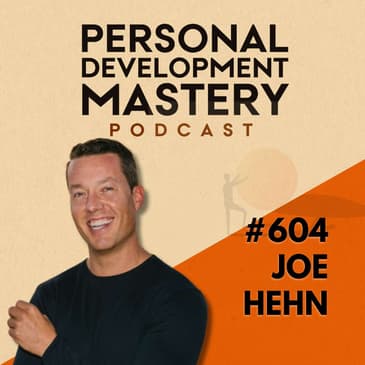
In this deeply moving episode, Joe Hehn shares how losing his wife, his identity, and the life he once knew led him to a powerful realisation: peace, fulfilment, and transformation do not come from controlling external circumstances, but from changing how you relate to them internally. If you have ever felt trapped by grief, anxiety, regret, uncertainty, or the feeling that life is happening to you, this conversation offers a practical and compassionate path back to presence, self-acceptance, and conscious living.
Discover how presence can reduce your suffering and bring you back to peace in the moment.
Learn how to recognise limiting beliefs and replace them with empowering ones that support real transformation.
Gain simple practices, including self-awareness, gratitude, visualisation, and self-acceptance, to begin shifting your inner experience today.
Play this episode to learn how to stop obsessing over what you do not want and begin consciously creating a more peaceful, meaningful, and fulfilling experience of life.
˚
KEY POINTS AND TIMESTAMPS:
00:00 - Introduction and episode overview
01:24 - Joe Hehn’s transformation after profound loss
02:16 - The bed in Bolivia and the crossroads moment
09:24 - Searching the world for healing and consciousness
13:25 - Identity, inner experience, and practical awareness
16:22 - Life happens through me, not to me
20:42 - Presence, self-awareness, and accepting reality
23:30 - Self-acceptance, authenticity, and the mirror practice
27:37 - The three-step formula for transformation
40:47 - Joe’s parting message: discover what you do not know
˚
MEMORABLE QUOTE:
"Presence is the liberation. Self-awareness tells us when we’re not present."
˚
VALUABLE RESOURCES:
Joe's website: https://joehehn.com/
˚
Coaching with Agi: https://personaldevelopmentmasterypodcast.com/mentor
˚
🎙️ Want to be a guest on Personal Development Mastery?
Message Agi on PodMatch: https://www.podmatch.com/member/personaldevelopmentmastery
˚
Personal development podcast for midlife professionals, offering actionable insights for personal growth, mindset tips, self mastery and purposeful living.
˚
Subscribe to our weekly email: https://personaldevelopmentmasterypodcast.com/email
---
A personal development podcast for midlife professionals, offering mindset tips and practical tools for personal growth, self mastery, personal mastery, and purposeful living. Discover psychology tips for emotional intelligence and growth mindset, including overcoming impostor syndrome and building self mastery.
Personal Development Mastery features personal development interviews and solo episodes empowering professionals, entrepreneurs, and seekers to cultivate self mastery and create a meaningful, fulfilling life aligned with who they truly are.
[Agi Keramidas]
In this episode, you will discover how to shift your inner experience when life has shaken what once gave it meaning. Welcome to Personal Development Mastery, the podcast that helps you gain clarity, overcome what holds you back, and take confident next steps towards a more meaningful and aligned life. I am your host, Agi Keramidas, a personal development mentor and coach, and this is episode 604.
In the following conversation, you will discover how presence can reduce unnecessary suffering, you will understand how to recognize and shift limiting beliefs, and you will learn a simple practice for creating a more peaceful and empowered inner experience. Before we start, if you would like to find clearer direction and take confident next steps towards a life more meaningful and aligned, I offer one-to-one coaching to support you on your journey. To learn more, visit personaldevelopmentmasterypodcast.com slash mentors. The link is in the episode description. Now, let's begin. From losing everything that gave his life meaning to rebuilding a completely new way of living, my guest today, John Hehn, has experienced a profound transformation.
Your journey took you across the world in search of healing, and today you help others transform how they experience life by understanding and working with their consciousness. John, welcome to the show. It's a real pleasure to speak.
Thank you, Agi.
[Joe Hehn]
Pleasure to be here. Yes.
[Agi Keramidas]
I look forward to exploring with you today. If I could put it in just one short phrase, it's, I would say, shifting our inner experience. But I will put that aside for the moment.
I was reading about your story, and there was a point that caught my attention, that you were speaking, a point that you didn't want to die, but you didn't want to live either. That's how the description was. So I would like to start, if you take us there, what was happening inside you at the moment and outside, obviously, to create that?
[Joe Hehn]
I like you, Agi. No messing around. We go straight to the good stuff.
So that's, this is a good question. Very good question. It's that gray area.
And I think a lot of people have maybe dabbled with it, maybe dip their toes in it where they weren't interested in living, but they were scared to die. And I found myself on a bed in Bolivia. I'd been traveling all through South America, volunteering with children, teaching self-defense to women and volunteers.
And that had come off a very kind of excruciating experience because I wasn't just this vagabond, this world traveler doing this for a living. It was kind of an escape for me because I was previously married and we had a very long relationship, very, very abundant life, but I couldn't see that life because I was obsessed with bills and success and like trying to create relationships that would serve me and looking at angles of what people had and what I didn't. And it was just playing that game.
And I didn't know that at the time, but had this beautiful wife, loving relationship, great, great group of friends, family, good job climbing the corporate ladder in Chicago, great city. And then my wife was diagnosed with cancer and that just kind of catapulted us into this whole season of real concern, real suffering, where it kind of very quickly humbled what I thought was hard before into something where we were daily wrestling a battle of mortality. Things were okay at first and then they got real bad.
A dozen tumors had spread to her brain and we had to move in with my parents and I became the caretaker and, you know, carrying her up the stairs, feeding her, bathing her for many, many months. And I never really thought she would pass. I always thought we would make it out because we had been in such so many scary situations like life and death, very close.
We always made it out. So I just kind of figured we would always make it out. And I was her champion on the surface in front of her, but behind closed doors, I was withering away with anxiety and just unbridled fear.
And then I found myself in the ICU one day and the doctor told me that she's not in there anymore. She had a very severe episode, something happened and we had to rush her to the hospital. And that's, you know, I remember my waking, her last waking moments, you know, expressing, I love to one another and they had to induce a coma.
And then three days later, I was begging her not to leave. And she was taken away and that was impossible, but she started communicating with me from the beyond a little bit. I know that sounds crazy.
I'm a very analytical minded man. I like to ride motorcycles, chop wood and great solutions. And, and I got a message from a friend of hers who was a spiritual medium.
And she just said that your wife is coming to me to communicate with you. She didn't want any money. She just like, I'm a friend of hers.
And that kind of ignited this whole spiritual quest where I believed what she was saying. I believe that my wife is coming to me. She was coming to me in dreams.
She was having me read certain books about the beyond. And so it opened up my awareness that this life is not what I have been told it is throughout my entire life. And so her death was the hardest thing I've ever been through, but also it opened up as a gateway into the unknown where I had to start seeking answers.
And so I didn't want to go back to work. I quit my job. We had savings.
We're going to buy a house. I didn't give, pardon my French, a shit about living a regular life anymore because the thing that was my anchor, you know, the wife, she was my business partner, my lover, my best friend, the future mother of my children, like everything was all encapsulated around that identity. And I lost being that myself.
So I was left with nothing. Cause I wasn't a corporate soldier. I wasn't this husband.
And that's when I realized that identity is a falsehood, that it really is a facade that we, a placard that we walk around through society to kind of brandish in order to feel valuable, accepted all this stuff. I kind of made sense of over, over months and years, but basically I departed and said, I'm just going to go travel and soul search and figure stuff out. And I was traveling through South America, doing a lot of great things, but also like getting myself a little bit of trouble, old habits and escapism and, and, and trying to bury my grief.
And I would experience moments of true liberation, like helping a child master a martial arts move or teaching English or teaching a woman self-defense to defend herself against her, her abusive husband. You know, these powerful moments where my suffering would cease to exist because I was so encapsulated in the present moment that I didn't exist outside of it. And then my mind would steal me away and be like, you're a victim of your wife passing away.
And then like, you know, the world colliding in on myself, I would return to that place of, of deep grieving. And so I'm on that, that bed in Bolivia, and I was going through this way, just trying to force things to work. And then I found myself on the bed and I got very, very sick in Bolivia.
You cannot eat certain things and drink certain things. And I found myself with everything coming out of me and I was emotionally void spiritually. I didn't know what was going on.
I had this understanding that my wife was guiding me and giving me signs and messages and encouragement and all that, which is good. But as a human, it wasn't enough. And so I knew I started having bad thoughts of like, I can't do this anymore.
And that was the crossroads where I was like, I don't want to die, but I don't want to live. So what do I do? And it ignited something into me to say, maybe you're living the wrong way.
Maybe the way you're living is not the answer. And then that curiosity sparked progression, growth, healing. And I started kind of gorging myself on personal development, self-help, religions, Stoicism and, and Buddhism and Daoism and, and Kabbalah and Sufism, and then all self-help stuff and, and new age and, and spirituality as I continued traveling the world.
And my wife is still a guiding force, but I would go to Italy and I was there for a long time studying Christianity and Stoicism, and then traveling through Nepal, trekking through the Himalayas, studying Buddhism and going to Tibet and, and visiting China and staying there and, and, and just kind of really engrossing myself in the Dao. And, and so I would make my way to these regions to kind of absorb myself in this culture in, in their belief systems and their faiths to just kind of soak it up and pull like what I wanted to understand ultimately consciousness. And, and to understand that my interpretation of life was the deciding factor on the quality of my life.
It wasn't external variables. It wasn't a circumstance or situation or others. It was, how was I looking at that?
And then how was I interpreting that? And so then I realized through study and just kind of very, you know, metacognition, self-diagnosis, and just being the observer of self-awareness and kind of grasping that, like, I think I'm onto something here that if I can train the way that I interpret life, then I can determine how I feel about it ultimately. And so then that opened up just a tremendous amount of understanding.
And then there's tools, there's practices, there's, there's techniques, there's, there's things that you can do to expand your, your power of your consciousness, which I believe is the, the mind, but it's your belief systems, your thoughts, your emotions, and your feelings. And so it just kind of took hold from there, but I know long winded, I told you before this, I talk a lot, but I'm on that death bed in a sense in Bolivia. And I, I'm, you know, keynote speaker and I go into corporations and I teach this stuff and I call it being on that death bed in Bolivia, because I believe that I had, the old life had died.
And the curiosity was kind of like the Phoenix being born from the ashes of the old way of living, being taught that I needed to chase materialism success and base my information on the educational system and the upbringing there and, and just use pharmaceuticals and eat these certain foods and do all this. They're just doing what I was taught to do. And I had to break free and that was my death.
And then I was liberated. And then kind of just understanding the spiritual lens of the beyond and that we are here, I believe as souls experiencing a human experience, but also we've got the human part of us. So we have to train the equipment, like driving a car, right?
We have to learn the different, the different gears and the, and the gas and the brake and how to turn and pivot and set destinations and goals. And who are we, who's in the car with us, right? And so we can learn how to, how to wield the power of our consciousness, mind, body, and spirit to just have an adventure.
So it's not like we have to walk through life being a sage and a Zen master and, and healing people and performing miracles, but just to minimize our suffering and to experience a bit more fulfillment and peace and joy. And I think that determines kind of everything. And so.
[Agi Keramidas]
And when you were saying, and there are so many things now that come to me from what you, you said, one thing was when you were talking about the deathbed in Bolivia, I remember when I was on a pilgrimage in a monastery in Greece, many years ago, there was an inscription and it said, if you die before you die, you won't die when you die. And that stayed with me, contemplated on what that could mean. And, you know, some things you mentioned earlier, you said, and I remember you said the, your identities or generally the identities are a facade, that there is not something that is real in us, but it is something we create or project.
And I think on reflection of that phrase, it is our identities or our false identities is one of those parts that if they die, then there's not any more of that to die. I would like to really go to the practicalities of this. And you were saying about the difference between the external, what is happening around or where your mind takes you outside of yourself to other events and the internal experience.
You mentioned some techniques, you mentioned awareness, because awareness would be the prerequisite to change the way that we see things. So I would like to go there and hear, and from all the experiences you had, you studied different traditions and religions. So guide us on how can practically someone can gain more of that ability to tweak or guide their inner experience.
[Joe Hehn]
I will, if you do me a favor. I want you to say that what you learned from the monastery in Greek, because I guarantee English doesn't do a good service, but let's hear the real quote.
[Agi Keramidas]
See, it just, it sounds so much more lovely.
[Joe Hehn]
It's like a poem as opposed to the English kind of mocking it up. So yeah, let me just tell a little bit of something just so people understand that this works, that, that what I'm about to share is not just like, Hey, I read all these self-help books and here's the summarization. You know, I, I left people off with that place in Bolivia and traveled the world, but I started realizing that if I really lean into this and understand that it's not that life happens to me, life happens through me.
Okay. And so if I lean into that, then what can I change in life? And I started testing it because I had eventually moved back to the United States and I was living in San Diego and I didn't believe in the law of attraction.
I was very much kind of obsessed with the non-attachment of Buddhism, where basically suffering is rooted in desire. What does desire mean? It means that we are not accepting reality for what it is.
We are not accepting ourselves as a part of that reality, others, or the circumstance. So I kind of break being present is acceptance, right? But there's three different kinds of functions or points of reality.
It's me, it's the circumstance. Sometimes other people are in that circumstance. So we, we have some moving parts and sometimes we accept others, but we don't accept ourselves in that moment, or we reject the situation.
I don't like this, but our family's there and we accept them, you know, so there's different moving parts within what it means to accept reality or have non-attachment. And then I started learning about what some would call the law of attraction and manifestation. Others, theoretical quantum mechanics on how, how the quantum field is influenced by observation and consciousness.
Let's say again, theoretical, but a lot of the similarities between those two, let's just say, interpretations of the universe and the reality are very similar languages. And so I understood that, well, what do I want out of life? I want love again.
I don't want to work for anybody ever again. I want to do well financially. I want to be a father.
I want to stay here in Southern California. I want to travel. I want to have nice things, not because it defines my identity, but because I, I find peace or enjoyment or, or fulfillment within the experience of that thing.
And that's what I've done for myself. I'm happily married to a beautiful woman, soulmate. I'll send you a picture some, some day of our very first date.
And we had matching tattoos, the exact same tattoo. And I knew we were destined to, to be in this life together. And we have a four-year-old and expanding family.
I have my own business where I teach basically consciousness to, into corporations and with executives doing well. The reason I'm not saying, saying all this is not to gloat and everything, but I had a great life before. And I couldn't see it.
And it had to be ripped away from me for me to recognize that I was not appreciating the life, that I was looking for what life wasn't instead of what life was. Okay. So I'm not saying, look at me, I've figured it all out.
Look, no, I'm just saying now I'm present. And because I'm present, I believe I've arrived. Like I've crossed the finish line and summited the mountain.
There are still things I want to achieve. I'm very ambitious. That stuff doesn't go away.
That's human nature. That's ingrained in, into exploration and adventure. We are wanderers that want to see things and experience new heights.
That's okay. That's beautiful, but not unless we're being present of where we are and what it took to come there, who we're with and the beauty that is literally embracing us of consciousness of God, of, of spirit of source. And so I teach this to individuals now so that they don't have to go through like the kind of nightmare revolution of their life of losing everything before it's too late.
Some people that's their journey. Some others can kind of have the intention to proactively shift into this conscious awareness to increase the quality of their life dramatically. And so the very first thing that I've already alluded to is presence.
Presence is the reduction of suffering. And what is presence? Again, it's just being mindful of the moment.
It's very easy to come to the present moment. Like if you're listening to this with, with myself and Aggie right now, you just stop. You take a deep breath.
You look around, you taste, you smell, you touch, you listen. Right. And you'll do that for 10, 20, 30 seconds.
And your mind won't really think because you're using your concentration to take an inventory of the current moment, but then the mind won't like that. So it will try to steal your attention away from the present moment into something that is outside of the present moment. And that is the attachment.
And we experienced that. So presence is your liberation. It's your salvation from suffering.
If you're again in an okay space, like if you have food and water and a shelter, like we're not talking about war zones here, we're talking about most people that are listening to this, driving to work or, or doing the dishes or providing for their families. When you were present, you are in a space where you are, have the highest chance of being at peace and accepting reality. So presence is the goal line.
It is the destination. It's exactly what we should be shooting for. So now how do we manufacture presence in our life through as, as you stated, self-awareness, self-awareness simply stated is understanding when we are not present.
That's it. So then we will start understanding, well, what steals us away from presence? Do I have a lot of regret in the past for things that were done by me mistakes?
I made decisions. I could have done better or things that were potentially done to me. Does my mind take me into those spaces and then drag me down that rabbit hole and bury me in those thoughts and those feelings?
Or am I concerned about a future? How am I going to pay the bills? Where am I going to live?
Are we going to be okay? Right? And then the mind, the ego steals you into there and creates delusions, stealing you away from being perfectly safe.
Or am I having attachment and rejecting the reality because somebody cut me off in their car or this email coming through again, this person I work with just doesn't get it. They don't know how to do their job or, or I can't pay this bill right now. So I'm super frustrated.
We're not accepting reality. So presence is the liberation. Self-awareness tells us when we're not present and then we can start defining the certain variables of our reality based on how we're interpreting that.
So it then leads into what I like to call authenticity. So this is being present of ourselves, which I think is one of the most important focal points in transcending your consciousness to just create a different reality is can I accept myself at any given moment with any, within any circumstance or situation around others? Can I show up and just, I'm not saying, you know, cuddle myself and give me hugs and you're the best ever.
No, just being like, you're enough. You're enough as you are. That is such a breath of fresh air.
When you just go, I like this, this mantra, this affirmation here, this is what I teach to incorporations and with the people that I'm kind of guiding. Cause it, it talks about everything that I just talked about with the present and the future and the past. It's I'm proud of you.
So we cover the past. I'm proud of you. Just saying that I'm proud of you.
Okay. You know how many people would love to hear that from like their father or mother and actually feel like it's true. We can say that to our ourselves and be self-reliant and have that feeling.
I'm proud of you. You're doing the best you can. That takes care of the present moment.
Cause if we're always doing the best we can, that means we always were, and we always will be, which means we are accepting ourselves as we are. It's effort, which is based on psychological studies and everything. It's better than results.
It, it achieves self mastery and we actually heighten our performance, which I also teach. So I'm doing the best I can. And then I believe in you.
Ooh, right? What do you want to achieve? What goals do you have?
What dreams do you want to taste and experience? Do you believe you're worthy of achieving them? Do you believe you're worthy of experiencing them?
Yes. That's very important. Yeah.
I believe in myself. I believe I'm worthy of tasting these experiences. And then ultimately I love you.
The ultimate form of acceptance is love. It's when we are in a partnership with a spouse or when we look at our children, love is the expression of total acceptance. That's why it's so powerful because not only are we accepting the individual, we're finding gratitude and ignoring all their flaws, all their faults, all their shortcomings.
And we are just embodying true unadulterated acceptance for this person. Do that to yourself and you will watch the world transform around you, people, individuals, opportunity, prosperity, success, material relationships, whatever it is that's important to you. You can go live in a tree house and be a monk and if you love yourself, you'll be like in a Disney movie.
The birds will talk to you and you'll make friends with critters and you'll have a great life or you can be a successful executive or an entrepreneur or stay at home mom. It doesn't matter, but your life will become something a lot more magical. And so what it defines now is that these are concepts.
So when we talk about gratitude, non-attachment, authenticity, presence, self-awareness, last one is self-care. It's taking care of our mind and body so that we can harness the power of our consciousness. So I just did breath work this morning.
I took a cold shower. I exercise, I eat right, low sugar, low toxins, low chemicals, sunlight, sauna, you know, all these things that I kind of just sprinkle into my lifestyle that help me feel alive and help my consciousness thrive. Oh, that's pretty good.
I like that kind of a little haiku action there. And so when you combine all these things, people go, that sounds like a lot. That's overwhelming.
I don't know where to get started. This, that, and the other. No, don't worry about all that.
I have a three-step formula for transformation. And what it is, is we set a goal. We set an empowering belief in a goal.
This is the very first thing. Think of you being this soul and you're going to get into this body and live a human experience. What do you want to experience?
So it's like going on a road trip. Where do you want to go? Okay.
Auggie and I were talking about Patmos, Greece earlier, and we can't really drive there, but we can jump on a boat too. Okay. So the analogy still works, but say, if we want to go to Patmos and we want to go experience all its glory, but we are very, very far away.
Well, we have to get our vessel prepared to take us along that journey. Okay. So, but first before all that, we need to set the destination.
So many people are obsessed, all caps, obsessed with what they don't want, with what they don't like, with what's stressful and exhausting and anxiety riddled. And they're obsessed with everything that isn't. Become obsessed with what you do want and make it a target.
Then our consciousness, and this is based on neuroscience and psychology and quantum and spirituality, then we can harness our bandwidth, conscious bandwidth to then align with that experience. We have something to live for and pursue. So the first thing I call is belief is basically creating an empowering belief slash goal for ourselves.
I believe I'm worthy of experiencing a loving soulful relationship. I believe I'm worthy of leading this company into new heights and creating great bonds with clients and team members. I believe blank, blank, blank.
Right? So we're setting the goal. And then I would have somebody say, okay, you set your goal.
Now tell me why you haven't achieved it yet. Tell me why you think you can't achieve it. And there will be revealed all of somebody's conscious and subconscious blocks because our consciousness, as I stated, influences and creates our reality.
What we believe about ourselves and our reality is the script that reality has to kind of follow. So if you go, well, I don't have the experience to start. I'm divorced and I can't start a new relationship.
I'm, I'm too lazy. I'll never, I don't have the work ethic. Well, then reality just has to reflect that conscious belief.
And so that's the actual thing that is standing in your way, not the circumstance of what your environment or opportunity is. We know we believe that, but it's simply not true. So when we define what do you believe is preventing you, you're going to be revealed with the very cancer cell in your consciousness that needs to be plucked out and replaced by some growth hormone in a sense where we put in a empowering belief instead.
So we go, I do have enough experience to launch that product. I do have enough self-worth and cool things about me to go be successful dating. I do have enough experience and grit and hustle and determination to land the promotion.
I do have the time to focus on myself and my spiritual growth and self-care. Okay. So then we, we transform the script and we, we have, I do, and I'm grateful and I can, and I believe, right.
And that's step one, we transform our consciousness and we give it direction. Then step two is evidence. This is based on neuroscience that we'll experience reality.
Our brain interprets what is happening based on our previous experience and kind of our conditioning. Okay. Psychology says the same thing.
We have confirmation bias where we tell ourselves the story to align with what we already believe or cognitive dissonance. We manufacture a story to give ourselves an escape. Okay.
So no matter what, we're not experiencing reality. We're experiencing the projection of our beliefs. So we need to go find the evidence that aligns with our new beliefs.
So if we believe we can achieve something now, go find the experience, the evidence rather. So it's just, we're retraining our reticular activating system basically to say, it's important to find when I am proud of myself and when I am grateful and when I experienced joy or accomplishment that is aligned with my initial belief and goal. So I will set, basically it create a kind of gratitude practice.
It's actually like a reality practice of saying, when you experience certain things, you are going to notice them. You're going to embody them. You're going to allow the emotion to flourish.
You're not going to tell your ego to steal you away from that moment. You're going to write that down. You're going to read it over and you're going to do it over and over again.
And what this does, it builds neuroplasticity retraining us to experience our reality that is now aligned with our belief system. Gratitude practice is seeing the positive out of the reality and therefore capturing that. So that is conscious evidence.
Then we have subconscious evidence. We're going to use visualization, meditation, maybe some, some kind of imagery that we're seeing on our desktop for, for our laptop. That is the goal, the family vacation, the successful career, finishing the marathon.
We're going to have pictures of this affirmations that we're writing on our mirror because now we need to transform not just our conscious state, but our subconscious state too. So we will visualize experiencing the fulfillment of our goal. What that, what's that, what that's like emotionally, right?
And we do that at certain times to maximize the investment of that subconsciousness right before bed, falling asleep or early in the morning when you're just waking up and you will visualize experiencing whatever you want to achieve, but then relishing the emotions of what it would feel like to do that. So what you're doing now with evidence is you're going out living your life and you're starting to believe in yourself because you're finding moments of pride and confidence and joy and peace and love. And then subconsciously you're manufacturing that same reality through imagination, but the brain can't tell the difference between what's imagined and what's real.
So it believes it's real. So you're living this dream life and your subconscious goes, this is my life. And you are now radiating with that conscious belief that you are experiencing this, which ripples out into the quantum realm and it, and it refreshes all the subatomic particles to skip out of, of infinite potential and choose a singularity to, to turn around and become the reality that is aligned with your conscious state.
Law of attraction. You attract what you are. Okay.
So then reality is consciousness. Conscious doesn't give a shit about you. It just reacts to you because you are an ingredient in a stew.
And if I am an ingredient that is super salty or super spicy, and I put myself in that stew, what does the stew become? It becomes a little bit more salty or a little bit more spicy. And that's all what consciousness does is it outside of us is it's reacting to us, but we have the power to then train our consciousness so that we can become higher consciousness or lower consciousness, sweet or bitter.
And then we are going to transform the flavor of our life into that same alignment. And the more we become that and, and frequently basically invest in that on a day-to-day basis, the more our life will adopt. It has no choice, but to do that.
Okay. It has to. And so that is step two.
And step three is energy. This is what a lot of people get right. It's easy.
Work hard, determination, dedication, resilience, setting habits, creating routines, creating a lifestyle, holding yourself accountable, discipline, discipline, discipline. Okay. But people think that that is the answer.
That's the third step because nothing happens if your mind is not backing it first, but is your mind obsessed with what's happening to you or what you want? So you see all three steps then feed into one another. And it's this three-step formula where you set your conscious attention, you empower yourself, you get rid of your limiting beliefs.
Then you go to work every day, doing your due diligence, finding evidence that's aligned with the goal consciously and subconsciously and putting in the effort and everything then feeds into itself like this beautiful system. Now you spiral up in life. It doesn't happen overnight.
It's like a vine going up. There's going to be hard times. There's going to be obstacles, but the obstacles are the things that serve you to become what you're trying to become.
They're ladders. People think they're, they're dead ends at their walls. No, that's the thing that you need to ascend.
It's literally an elevator, an escalator or staircase, you know, so everything is happening for you through this process. Everything is happening through you, but it's also happening for you to serve you. And then we let go of the how things are supposed to happen and the when, and we just continue on this cycle.
And all the while you're experiencing presence, joy, peace, and gratitude. And then life, you all of a sudden kind of recognize I've made it. And yes, I have more goals and more ambitions, but like I've already scaled the hardest summit and I'm going to scale others, but not because I was scared.
About not being enough anymore because now I believe I'm worthy and I can do it. And I just want to know what it's like to be on that mountaintop and achieve that goal and know this experience because I do believe I'm enough.
[Agi Keramidas]
Thank you for managing. I will use the word managing to compress all this that you said in all the three steps and how they, you know, one leads to the others. It was very useful.
What I still remember, it remained with me. There were actually two things and I will start ending our conversation with this. One was you said that many people obsess about what they do not want and that is, or it can be subtle, but it is a good opportunity to catch ourselves whenever we complain or tell about what's stressful or what we don't want.
And the other was, and I think when you, it was those four phrases that you said, and when you were describing them, I thought that this would be a great practice to do in front of the mirror and say to yourself, and I wrote those phrases, I'm proud of you. You're doing the best you can. I believe in you.
I love you. And I think that was also something I believe that is very powerful and it can shift someone's awareness or energy or even at that moment the vibration that they have. So thank you for this absolutely detailed, but yet at the same time, you know, compact presentation that you gave of this.
[Joe Hehn]
We only had 30 minutes. So yeah.
[Agi Keramidas]
I know this, this is the topic of hours and hours that can be discussed for sure. And that's why I'm saying that I appreciate that you managed to present it in such a way that it was both comprehensive and brief at the same time.
[Joe Hehn]
Thank you. It only took 10 years to figure out how all this stuff intertwines. So and imagine in five years, I'll know a lot more to have some other version, but yeah, lots of trial and error.
[Agi Keramidas]
That's such is life. We choose to see it like that. It is that indeed.
And I agree with you. Joe, I want to thank you very much for this fascinating conversation and to wish you the very best with continuing your journey and your mission with what you do. I will leave it to you for your parting message to the listener of the conversation.
[Joe Hehn]
Just question, I think circling back all the way to Agi's first question, what you don't know. That was a big thing. That helped me kind of get out of that bed and, and, and fight to live is what do I not know?
Like, you don't have to rely on me or Agi or anybody else as a resource. You, you find the resource that speaks to you in that moment. You may, you know, become a devotee of Islam or, or, you know, start really practicing stoicism or new age.
It doesn't really matter, but discover what you don't know, because there's so much. And it's not for you to master everything. It's for you to experience something that helps you feel better about yourself today, not forever, just today, find a little spark of inspiration and watch how everything changes.
If you continually do that from one day to the next, making it easy, don't overthink it and think you have to revolutionize your consciousness. Just ask yourself, what can I learn today? That'll make me feel good about myself.
And even if you put that into AI and say, teach me something today that you didn't teach me yesterday, that will help me feel good about myself and the life I'm living. Okay. And you're going to find little things and simplify it.
And that will become a practice. However you choose to explore it, that will then equate to like almost compound interest. You'll look back one day and you'll be like, I am wealthy because I invested every single day.
And that investment built upon the day before and the day before. And all of a sudden you're going to arrive one day where you're like, holy shit, I did it. But just start with today and find the one little piece that will make you feel good about being who you are today and living the life you're living.
[Agi Keramidas]
Thank you for listening to this conversation with Joe Hain. I hope it has given you a new perspective on how your interpretation of life shapes your reality. One practical action tip to remember from today is using presence to interrupt suffering.
So next time you notice your mind pulling you into regret, fear, frustration, or resistance, pause and take an inventory of the present moment. Breathe, look around, listen, feel your body. Notice what is actually happening now.
This awareness of the present moment is key to shifting your experience of reality. Join us every Monday for in-depth conversations and every Thursday for shorter solo episodes with insights and tools you can use. If you would like to find clearer direction and take confident next steps towards a life more meaningful and aligned, I offer one-to-one coaching to support you on your journey.
To learn more, visit personaldevelopmentmasterypodcast.com slash mentors. The link is in the episode description. Until next time, stand out, don't fit in.

 5.00 (74 Reviews)