If you woke up tomorrow and realized you’d been given “one more chance” at life, what would you do differently today?
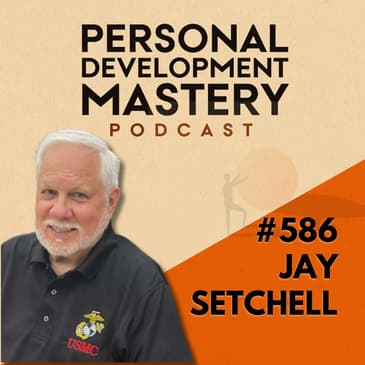
It’s easy to treat life like something we’re entitled to… until a hard season hits: pain, loss, setbacks, uncertainty. In this episode, Jay Setchell (in his 70s, mostly paralysed, having survived multiple near-death experiences and 73 surgeries) shares how to internalise that life is a gift before you’re forced to learn it the hard way, and how gratitude, faith, and personal responsibility can carry you through your toughest winters.
- A simple mindset shift to stop asking “why me?” and start navigating adversity with acceptance, resilience, and clarity.
- Practical ways to build inner strength—so you keep moving forward inch by inch even when you feel stuck or overwhelmed.
- A powerful framework for radical ownership, including how to apply it even when life is outside your control.
Press play to learn how to develop the “strength within you” so you can stay grateful, take ownership, and remember: no matter what you’re facing, it’s always too soon to quit.
˚
VALUABLE RESOURCES:
Jay's website: https://neverquittrying.com/
˚
Coaching with Agi: https://personaldevelopmentmasterypodcast.com/mentor
˚
Subscribe to our weekly email: https://personaldevelopmentmasterypodcast.com/email
---
A personal development podcast for midlife professionals, offering mindset tips and practical tools for personal growth, self mastery, personal mastery, and purposeful living. Discover psychology tips for emotional intelligence and growth mindset, including overcoming impostor syndrome and building self mastery.
Personal Development Mastery features personal development interviews and solo episodes empowering professionals, entrepreneurs, and seekers to cultivate self mastery and create a meaningful, fulfilling life aligned with who they truly are.
[Agi Keramidas]
Today, I'm very excited to be speaking with Jay Setchell. Jay, you live by a simple challenge. Don't ask why, ask why not.
You are now in your seventies and mostly paralyzed, yet you remain very involved in multiple ventures fueled by your faith and belief. You have faced multiple near-death experiences, 73 surgeries and years of hospital, and yet your message is unwavering. It's always too soon to quit.
Jay, welcome to the show. It's such a pleasure to speak with you.
[Jay Setchell]
Same here, sir. We've talked a couple of times on email and it's a pleasure to meet you, sir.
[Agi Keramidas]
Likewise, I enjoyed our little, let's say, philosophical exchange through the email. Jay, what I would really like to explore with you today, or at least the main pillar, is how we can internalize, if possible, that life is a gift and treat it as such. What I will start with asking you is this.
You say that most people don't understand what a gift life is. So, what does it take for someone to truly understand that life is a gift?
[Jay Setchell]
I look at it from having been dead, and dead three times. I've looked at it from being three other times, and literally four, that I should have been dead. The last time was four years ago, and my wife was told to go home and make funeral arrangements.
They didn't expect me to make it to the end of the week. Or through other surgeries. How many people die during surgery or after a surgery?
I've had, as you mentioned, 73. But I'm still here. I have one part of my body that works, that's all busted up and pinned.
But my fingers work some, and pretty good. And I'm grateful. I'm grateful I have that, because I could have been dead almost 60 years ago and turned to dust by now.
So, I think that each day, I believe that the more people you help, the better person you become. I believe that that's a gift from God to help other people. Some people that have been in my position, or in my position right now, even with the pain, would be angry.
They would be, woe is me, or why me, and hold it that they've been punished, or look at it negatively, and they don't want to outside. Or they would have just quit years ago. And I think that, just in my opinion, and how I was raised, that I should be grateful.
And I am grateful. I'm grateful that God's touched me and kept me here. And I didn't realize it for several years.
It took me into my early to mid-30s to really pick it up. And the older I get, the more I appreciate it. And I think that's something, too.
It's like learning. Well, it's like, when you and I, when you talk about that, and maybe you're going to ask me, but the essence of time, time and life are very tied together. Because if you're in a great deal of pain, and you're sitting there, each second is like an hour.
A minute is like a day. It's like, oh, I could never get out of this. But if you take seconds, turn into minutes, turn into hours, turn into days, turn into weeks, turn into months.
If you look at it that way, you have life. It just continues to extend. And be appreciative of it.
That's all I can say. I think that's why I look at it differently, sir. I just don't, I wasn't educated into understanding that, because I don't think that's something that people really realize.
But it's such a gift. What would you, how many people are happy to get something special for Christmas, or special for their birthday? And they think, oh, glory, glory, glory.
But how about if I could give you life? How do you compare life to a bicycle? Or whatever.
And there is no comparison. So I'm just, I'm very blessed. And I believe that the more you're grateful, I think the more you're blessed.
That's all.
[Agi Keramidas]
Jay, you mentioned, and I will go to that. You said that there would be people, and I think we can all understand or appreciate that, that they would be in a situation like you have, or way before this situation. They would be angry, as you said, not wondering why this has happened to me.
Or the word bitter comes to my mind, or perhaps resentful. So what is the difference? And I mean, the internal difference between a person who has this outlook on, let's say, life's unplanned or events that are really not to our preference.
So what's the difference between this, that kind of person and one like you that sees it as a blessing, as a gift, and being appreciative of it?
[Jay Setchell]
That's asking me to kind of split people into two different segments, which I understand that's the question. And I believe that when I was raised, nothing was for certain. So you should expect the best you can, things to change in your life, whether it's the seasons of the year.
I mean, you got spring, summer, winter, and fall. Sometimes if you're in the southern United States, they're not very extreme. The northern United States or northern Europe compared to Greece, there's a difference in the spring, summer, winter, fall.
It's just not as radical. So I think it's a visualization and the acceptance, and it's going to happen. So embrace it.
And if you embrace it, you can visualize an outcome. And just accept it as a challenge. And I think that's what builds your resilience to overcome the next adversity or roadblock or failure, for that matter, that it becomes there.
And you've realized it. But if you can accept the fact that life is going to change, we're going to get older. We're not going to stay the same age.
We're, you know, it's like we talked about the difference between our age already. It's like our children, they look at things different. But try to get them to understand that they are going to get, they're going to get older and things are going to change in their lives.
And whether it's we keep our hair or not, I don't, you know, for example, I just had a problem with my hair falling out. I don't know why. And now it's coming back.
So it's like there wasn't anything I could do about it. So why get angry? It's in the why me, I did say, and I will mention this, that I mentioned to my mother when I had broken my neck and drowned and had died and was paralyzed from the shoulders down, that I did say it was about three months into above, well, it was about four and a half, five months after the accident.
I did say, why me? But I didn't mean why me like I'm guilty or I'm being punished. It was the fact that I had died.
I should have been dead when I was 17. I died when I was 19. I died when I was 23.
I died when I was 31. And I meant it more like, why is this continuing to happen? So I accepted the fact that it did happen and I just have to make the most out of it.
So don't give up, don't quit. It's always too soon to quit, as you mentioned. And I've been saying it for five and a half, six decades and accept that.
And so I think the differences between the people though, in summary, is those that aren't expecting it or wouldn't, they don't embrace the fact that they should know things are going to change in their life. And if you don't expect it, you don't embrace it. You don't endorse it.
You can't visualize or have an attitude or a mindset to look through it and see what's on the other side. Now, how do I get there? And work your way through it.
[Agi Keramidas]
Thank you. And I will stay with this and I will add, you mentioned the word resilience in your answer and I believe that it has something to do with the difference between the people who quit and the people who carry on and see it as, you know, a season, as you very nicely said, that you can go through it. So let's talk about this for a little bit, the resilience or that emotional inner strength that one can have to handle all these situations that life throws at us in a more, let's say, empowering way.
You said gratitude many times earlier. So I get that as a foundation, an outlook of life that I'm grateful for anything that happens, even if it is not, even if it is winter time in my life right now, because spring will come. And my question was, and I would like to hear something practical, really for the benefit of the listener, to improve this resilience, this emotional, I think you use the word strength or personal strength, and that's, we don't mean about the same thing, to improve this inner strength.
What's a practice, what's something practical that one can do to get better at it?
[Jay Setchell]
To me, the easiest answer or the best answer is simply, you just can't afford to give up. You can't afford to stop. You, if you look, see, or know of other people that have been through something, or you can read a book or see something, you know somebody that maybe is, I've got several friends that have lost both their legs in combat, you know, they're from IEDs, but they don't stop.
They continue on with their artificial legs. And my legs don't work, but they're still on. But so they're more, these guys give me a hard time because they say, see, we can take our legs off and put them aside and roll over in bed.
You have to drag your legs and move them. But I just think that it's something you just, you have to look at it and say, I'm simply not going to quit. I'm simply not going to give up.
I'm going to work my way through it. And once you've done that, it becomes easier the second time. Once you've done it the second time, it's easier the third time.
And sometimes it doesn't hurt to look back at what you've been through and pull out what was it I did then that can help me now through my current problem. And that's just, again, I think just breaking it down from my mind is expect something's going to change. You're going to get older.
If you're going to stay alive, you're going to get older. So what should I expect? Should I expect my hair to turn gray and here I've got dark hair?
Well, yes, eventually you're going to. So if you don't embrace the fact that when it starts to happen, it's just life. It's life.
And I think that that's just a, you look at it that you're being, you've got a gift. You've got a gift of life and it's going to change. So I think that's just the biggest thing between those that, because I do know some people too that have given up.
I mean, when something, one thing happens, they've just quit or the second time, especially it's like, oh, it happened again. I'm just going to stop. And I don't, it's just so hard to understand that.
And I talked to some of those people, you know, and a lot of it's helped because if you can give them goals and understand that inch by inch, it's a cinch or just a step at a time, it's like, what's the saying that the journey of a thousand miles starts out with one step. And so that's really the answer in my opinion, or how I would look at it.
[Agi Keramidas]
It's that phrase that you use, it's always too soon to quit. Certainly, you know, puts that a comment, a final comment in what you were saying for sure. Talking about phrases, there is another phrase that I know that you are very keen on and you enjoy, it's like 10 little words, one after the other.
And the phrase is, if it is to be, it is up to me, which is, I have heard this phrase years ago from a mentor of mine. That was his own, let's say, way of looking at things. So I would like to hear, you know, your take on this very powerful little phrase that's really, you know, for me, when I hear that phrase, what comes out of it is personal responsibility, radical ownership of anything that happens.
So I would like to hear your thoughts on the phrase and how can one, you know, internalize it a little bit more and live by what the phrase shows or teaches.
[Jay Setchell]
Yes, sir. Yes, sir. Not a problem.
And to me, that comes pretty easy from whether you can look at it from a thousand different views. Now, whether that means that you've got a son that's a problem and he's 15 years old and I don't mean a big problem, but he's looking at things lackadaisically or not seriously and he's not getting good grades, but yet he wants his driver's license. At some point, he's going to have to take driver's ed education.
He's going to have to drive his car. He's going to have to take the test. So you can say, I can't drive the car for you.
I can't take your test, but you want the driver's license and the only one that can do it is you. So there again, if it is to be, it is up to me to him. And I've got a son that's 50 years old and he reminded me here about two weeks ago, we were talking about something and he had something happen.
I don't recall. It wasn't anything big, but he said, Dad, what it reminded me of was when I was 15 years old and I was getting in trouble and you said to me, do you want your driver's license? And I'm thinking, yes.
Okay. And I remember you told me 10 two-letter words and he has not told me that in 35 years, but it came back. So it's when I went through, let's say the third time I died and I was going through rehab for many, many months through my paralysis.
It's not up. If you're the physical therapist or the occupational therapist, and you're working with me to raise my arm, I'm never going to get anywhere. If you pick my arm up for me, it's up to me to raise my arm.
So you have to have that inner strength, that inner fortitude to have the sense that you need to do it. And there again, a lot of that comes very little steps, little bits. Maybe you can only raise it twice, but try to raise it the third time.
And the third time will come easier than because you've been working on it. So I just get so much of that comes back to whoever it is. It doesn't matter what, it doesn't matter if you're a student in a class.
It doesn't matter if you're a mid-management individual, wanting to get to that upper next level of management or get a pay increase because you've learned another product or another technology. It's up to you as a person to work on it yourself. And so it's just comes back.
And I do say that, and I've said it before, it's in my book. It's like, if it is to me, it is up to me. And like you said, it's so easy to say it, but how do you understand it?
And I think that that's just it. There's a thousand different ways to say, but there's some examples.
[Agi Keramidas]
And I will just add to that, that some things are not to our power. We can say, if it is, it's up to me. But some things will happen regardless of our own effort or actions.
[Jay Setchell]
If you want me to continue just a second, I think that you were asking me, what about if you're considering, if it is to be, it is up to me, but it may be something out of your control. And if it is, then part of what is up to you is more, how do you put up with it? How do you get around it?
How can you go around it, over it, under it, through it? Or do you just have to wait, but move on to another project? And that other project, while you're working on it, will take your mind off the problem you had and maybe gives you a different perspective of a way to resolve it.
Or maybe it's something that just can't be resolved. There are some things you can't change. I can't change the fact that the sun comes up in the east and sets in the west.
No matter how much I think I can, I can't. So there are certain things you just have to, then you accept that. But that still doesn't take away from resilience or visualization.
It doesn't take away from any growth. It's just a set of mind, it's just more of a mindset that, hey, this is what it is.
[Agi Keramidas]
Thank you. That's, it is useful. Thank you very much, Jay.
Appreciate it. I know we have talked about quite a few things. There is one other, actually one last, as we're reaching towards the end of this conversation.
Even though I will make a comment here that I could be talking for a multiple amount of time with you. The one thing I wanted to ask you, and it came from your near-death experiences and coming back on multiple occasions. I was wondering, how did it change this outlook that we've been talking about during our conversation throughout?
How much of it was influenced by you dying and coming back? Was there something specific that shifted as such? Because you talked quite a lot about the way that you were brought up and the mentality that you had.
But I did want to have a comment about this. I can only imagine that these kinds of events are transformational. Probably doesn't even begin to describe it.
So I would like a comment from you on how it changed you personally as Jay in terms of this appreciation of life that we've been talking about.
[Jay Setchell]
I think that I had an appreciation for life my whole life. I've had an appreciation for hard work. Now my hard work and your hard work may be two different kinds, but I have an appreciation for seeing something become accomplished.
It's whether it's if you're if you're going to build a picnic table. You start out with different pieces of lumber and you have to cut them into size and you have to put them together and you have to bolt them or nail them or screw them together and you end up with a picnic table. So you have some appreciation for what you can do or what has happened, what became out of it.
So I think that my whole life I've had an appreciation for life, but I understand that life ends as well. And for example, I know people that if they were going to have a calf, a small cow, they don't understand that that calf is going to become mature and at some point it's going to die. So a lot of cattle are raised to be eaten.
So they're harvested just like a crop. And yet some people say, I could not look into a cow's eyes and butcher it. I couldn't do that.
Well, but that's part of life. And henceforth, I've had an appreciation for life, I guess because of the seasons, the seasons of change of your life. I think that part of my seasons of change have happened to me and I've died.
And they've just accentuated or made more evident those other beliefs that you can move on through and take advantage of it. And I think that that's one thing that people need to do is take advantage of what you have. What opportunities do you have?
If you're able to move, boy, imagine those people that can't move. And something I mentioned here not too long ago, go to go to some hospitals, go to places, rehab clinics, go to see people that can't do what you are. And it gives you an appreciation for what you have.
And that a lot of times when you see people like that, or maybe you're related to somebody or have a relative that, that, wow, they've been through what you have to a degree, or maybe they've got cancer, and that they are seeing the end of times. They just haven't got there yet. And I had a very good friend of mine and a surgeon who, wow, an amazing individual, and he didn't know he had pancreatic cancer.
And by the time they found out he was dead in three weeks. Well, it's like, wow. I mean, that that just goes really fast.
It makes the people around you appreciate it. It brings to your attention. Get checked out earlier.
Maybe even if you're not feeling bad, it's something that you could do. But I don't know if that's preventive, I guess would be more of a term for that. But I I don't know, because it's so much ingrained in me, Aggie, that I believe it's something you need to believe it's a faith.
It's it's a in that there's a difference between believing in a faith and hope. I think that people can hope, let's just use buying a lottery ticket or shooting a weapon or something and hitting the target, whether it's a bow and arrow, I can hope or myself myself, let's go back to that. I when I broke my neck, and when I was in rehab, I didn't hope that I could move my arm.
I didn't hope I could move my finger at all, or my leg at all. I had a belief that I could do it. Now, it may start it out with hope.
But if you don't have the belief, it's like a project or a company. If you have it, don't don't take something on that you don't have a passion for. And if you've got a belief in it, and a complete faith in it, it's going to succeed, that it's going to succeed, you have a much better opportunity to have it work.
Then if you just have a hope that well, I hope that does. I hope I can fill up my bucket with water. Well, no.
Okay, well, hope is different than faith or a true belief. You know, it's like, do you believe in an afterlife? You know, or do you have faith that you're going to meet, meet, meet the Lord someday, you know, in your faith, whatever that be, or whatever your Lord is, or whatever your religion is?
Or do you hope you're going to do it? So I, I don't know if I'm making it clear. Because that's, that's a pretty Yes, you do.
[Agi Keramidas]
And I think that's a very good distinction that you just made about the belief versus hope and something definitely for someone listening now to consider in their own life and their own circumstances. Jay, first of all, let me thank you very much for this conversation we had. Before I wrap up for today, I want to ask you, where would you like to direct the listener that would like to learn more about you and your message and your book?
[Jay Setchell]
Yes, the book is the title and such. The title is The Strength Within You. And the subtitle is It's Always Too Soon To Quit.
So The Strength Within You, It's Always Too Soon To Quit. And what I did within that book is, it took me many years, and it took a lot of people to convince me to write it. And yes, it talks about some of my medical problems and dying and so on.
But it's more about what did I learn? Going through all that? What what does it take in the strength within you?
My purpose in using that title is, it's, it's, we all have a strength within us, whether it's in our DNA, whether it was you were the way you were raised, whether it's a religion, whether it's your friends, neighbors, is it anger? Is it frustration? That can be a strength.
Pain, I use pain as a motivator, because I'm always in pain. And by using pain, if when you work on a project, and you put your mind to work, and you really dedicate yourself to getting something done or accomplished, you tend to forget or the pain dissipates, rather than sitting in a chair in the dark. And all you can hear or feel is the pain.
And so if when you take in your mind elsewhere, or to me, a great example, I don't like going to the dentist, I just don't like a root canal, for example, I just don't like but, but I've had so much dental work because I had 32 facial fractures many years ago. But when I go to the dentist, and they're, they're doing their they're going to do a shot in your mouth, or they're going to do whatever. I put myself in another place.
I mentally, if you will transport myself, I know that doesn't sound right. But I think about something else very, in a very dedicated way. And so by doing so it takes me out of that, that that dental situation, if you will.
So, so there again, getting back to, I just, it's use your mind. And if somebody had a choice, somebody that's listening, would you rather have what you have from your shoulders down, but not have your mind? Or would you rather have your mind and be paralyzed from the shoulders down?
And to me, I'd rather have my mind, I, you can do things, you can still talk, you can still, or you can still think you can still communicate, you can still share, because it's your mind that controls everything. The only two things that you do automatically that God put into you is breathe, and your heartbeat. And you don't have any control over that.
That's something that's that just it's automatic. But if you want to pick your nose, your hand up to scratch your nose, or it's your ear, or scratch your leg, or you're going to stand up, you have to think about that. You don't think about it, really, it just act, it happens.
But it's all an action in your mind, for versus your heart in your breathing. Because if I had to think about breathing, I've taken probably 10 breaths since I've said what I said, I would have died because I haven't breathed, you know, or if I had to remember to make my heart beat 60 times a second, that means every second I have to say, beat in, beat out, whatever. So it's, it's, it's an automatic, it's a something that I think is, it's in your, it's in your thought pattern.
And to move ahead. Wow, just dig deep, dig deep into your heart. And sometimes sit back, lean back, relax, do a little thought of prayer.
I pray quite a bit. I mean, I, I thank God every night when I go to bed for for the day and for having gotten me through the day. But yet I look ahead and trust God with my life for tomorrow.
And for what he's got planned for me, because he's going to help me through all the all the circumstances, one way or another. And if not, then I will, if I do what he what I think he wants me to do. It'll work.
It'll come out.

 5.00 (74 Reviews)