TO WATCH THE CONVERSATION ON YOUTUBE, CLICK HERE.
Have you built a successful career on paper, yet quietly wondered, “What’s the point of this anymore?”
This episode speaks directly to anyone who feels trapped between external success and internal misalignment. If your identity has been shaped by your profession for years, it can be deeply unsettling to admit that it no longer fits. In this conversation we explore how to recognise that shift, understand where your current identity came from, and begin creating a more meaningful next chapter without dismissing everything you have already achieved.
You will discover how to create distance from an identity that no longer feels true and reassess the story that shaped your career path.
You will learn a practical three-part framework to reassess, redefine, and reignite your next chapter with greater clarity and intention.
You will gain simple, actionable tools for overcoming resistance, rebuilding confidence, and taking meaningful steps toward a life and career that feel aligned.
Press play to learn how to let go of an outdated identity and start building a future that feels deeply fulfilling, authentic, and fully your own.
˚
MEMORABLE QUOTE:
"We are here to evolve and grow and that is normal and natural and to be embraced."
˚
VALUABLE RESOURCES:
Kate's website: https://katekayaian.com/
˚
Coaching with Agi: https://personaldevelopmentmasterypodcast.com/mentor
˚
🎙️ Want to be a guest on the podcast?
Message Agi on PodMatch: https://www.podmatch.com/member/personaldevelopmentmastery
˚
Personal development podcast for midlife professionals, offering actionable insights for personal growth, mindset shifts, self mastery and purposeful living.
˚
Subscribe to our weekly email: https://personaldevelopmentmasterypodcast.com/email
---
A personal development podcast for midlife professionals, offering mindset tips and practical tools for personal growth, self mastery, personal mastery, and purposeful living. Discover psychology tips for emotional intelligence and growth mindset, including overcoming impostor syndrome and building self mastery.
Personal Development Mastery features personal development interviews and solo episodes empowering professionals, entrepreneurs, and seekers to cultivate self mastery and create a meaningful, fulfilling life aligned with who they truly are.
[Agi Keramidas]
Why success doesn't feel good anymore in midlife and how to create a more fulfilling next chapter. Welcome to Personal Development Mastery, the podcast helping midlife professionals gain clarity, shift their mindset and take confident next steps towards a more fulfilling life. I am your host, Agi Keramidas and this is episode 598.
If you are looking to understand why your career no longer feels right and take steps towards a more fulfilling next chapter, this conversation explores how to reassess your identity, redefine success and move forward with clarity and courage. Before we start, if you are a midlife professional ready to find clearer direction, understand yourself more deeply and take confident next steps, I offer one-to-one coaching to support you on that journey. As a former dentist who has walked this path myself, I know how challenging it can feel.
To learn more, visit personaldevelopmentmasterypodcast.com slash mentor. The link is in the episode description. Now let's begin.
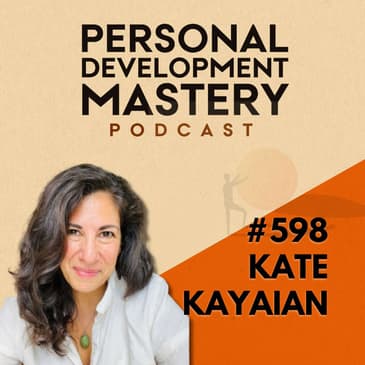
Today I'm delighted to speak with Kate Kayaian. Kate, you began your career as a professional concert cellist, performing at the highest level only to reach a point where success no longer felt fully aligned. You now help high achievers to define success on their own terms and create careers that feel as good as they look.
Kate, welcome to the show. It's a pleasure to speak with you today.
[Kate Kayaian]
Thank you, Agi. It's great to be here with you today.
[Agi Keramidas]
I look forward to exploring with you today, among other things. One thing that I would actually like to start our conversation with is how one can navigate that point and many listening will probably realise themselves in that. Navigating that point where despite the external success that one has according to the standards of society or expectations from parents or whatever, despite all that, something is off.
There is not, I like the word fulfilment in that case, but I don't want to just frame it only like that. Let me start then by this. Let's say someone listening to now is navigating this point between this success and lack of internal alignment.
What's something that you would like to begin this conversation with speaking to them?
[Kate Kayaian]
Yeah. Thank you. I started playing the cello when I was four and a half.
My parents wanted me to learn an instrument. I chose the cello at that age and I loved it. I was good at it and I had great training, the best teachers, the best opportunities.
I was very lucky, very grateful. I embarked on this career and it was my entire identity from such a young age. Anytime I saw extended family, the first question was, how's the cello?
What concerts do you have going on? It was everything people talked about. It's how they knew me and it's how I wanted to be known.
I always said there was no place I'd rather be at eight o'clock on a Saturday night than onstage playing a concert. It was that way for so long, decade after decade. All of my friends were other musicians.
We were colleagues and friends at the same time, so going to work felt like going to a party essentially. At some point in my late 30s, I would walk out on stage perfectly happy to play this concert and at the same time wondering, what's the point of this? Am I just going to keep doing this week after week for the next 30, 40 years of my life?
What am I doing? It wasn't that I was burned out. I wasn't exhausted from it.
It wasn't that I no longer enjoyed it. It just felt off. I really started questioning everything about it.
At the same time, I realised that I started to feel some different feelings about how I was spending my time. I used to work for a big youth orchestra in Boston and it was all day on Sunday and I loved it. I loved the kids.
I loved the families. I loved the work I was doing. But on my way there from my house, I would drive by this diner and there was always a long line of people, young couples with babies and strollers and groups of friends standing in line waiting to get a table at this diner to have brunch.
I remember thinking, I would love to have brunch someday. I'd love to have a Sunday free to have brunch. Musicians work all weekend long.
All weekend long, classical musicians anyway. Also, those Saturday nights when before there was nowhere else I wanted to be but on stage. Suddenly, I was like, oh, so-and-so is having a dinner party that I can't go to because I have a concert or these friends want to go away for the weekend, but I can't because I have concerts.
As my life started to evolve and I started to grow as a human, it took me by surprise. I think that often we just go along and we expect to remain the same person forever. We are who we are and we're going to feel the same way about things and that's just not how it works.
[Agi Keramidas]
You said earlier, and thank you for sharing this the way that you shared the story, there was a phrase that you said that you asked yourself, what's the point of all this? And I have also asked myself that question in my own midlife transition and I think that is a question that really refers to what I said earlier as fulfilment. You mentioned identity and that's where I would like to point the conversation towards and specifically this identity that we get as a professional of whatever it is that we do for 10, 20, even more years.
Midlife often brings this identity shift in a way, but many people find it difficult, let's say, to let go of the identity that has defined them for a long period of time. I would like to address this kind of situation or these kind of people and what would you do to someone like that that is clinging on to an old identity even though the signs are clear that this identity no longer fits the person that they have become?
[Kate Kayaian]
Yeah, identity is such a perfect place to start with this conversation. In my experience going through what I did to sort of leave classical music and figure these things out, there was a lot of resistance. People didn't want me to shift my identity yet I felt this pull and what I ended up figuring out and I wrote a whole book about it, Beyond Potential, is a three-part process where the first step is to reassess, the second step is to redefine, and the third step is to reignite.
I think a lot of people skip this first step which is where identity is based and that is to reassess. Now, why was I a cellist? This is my overall identity.
Why was I a cellist? I was a cellist because when I was four and a half, I had a crush on a boy who was eight who played the cello and I knew that if we played different instruments, we would never be able to get married. This is my logic and this is the reason I have this whole identity in my late 30s.
We laugh and it is funny that a lot of these choices that we made are arbitrary. Maybe you became a dentist because you went to a career day at school and your friend's dad was really cool and he was a dentist.
[Agi Keramidas]
I actually became a dentist because my mom was a dentist. My background, that was the reason, so it resonates.
[Kate Kayaian]
It resonates. What if your mom had been a teacher? Would you have been a teacher?
If we can reassess, where are we and how did we get here? What are the stories we've been living according to? It creates a little bit of distance.
It creates the circumstances around that identity and then we can rewrite that. We can say, okay, well, if it's a little arbitrary that I became a cellist, then I can become something else. Other things are possible.
I think that's the first step is to just create a little bit of distance. It goes from, I am a cellist because that is just who I am. I was born to be a cellist.
It takes it from that to, no, I became a cellist because we happened to be family friends and I had a crush on this boy and he played the cello and the decision was made. Right? Then maybe I had some talent for it and I had good training.
Yes, yes, all of those things, but at the same time, it's arbitrary. The first step is to create a little bit of distance between that identity. Then the second step, I think, is to redefine, to look at what else could be possible for you.
I think it often seems impossible. Well, no, I went to law school, I went through all of that work, all of that money, all of those studying hours, and now I'm a lawyer. I can't possibly do something else.
I work with somebody, Agi, who's as a client, I do a lot of one-on-one coaching to help people through these transition moments. He loves classical music and he wants to be a classical musician and he just had it in his head that he couldn't. It's looking at this, how do we redefine ourselves as a musician?
What would that look like? What would that take? As soon as he was able to redefine himself in that way, his next steps became very clear.
If I was a professional musician, I would have a teacher that I was playing for regularly. I would book concerts. I would do these competitions.
He just started doing those things and here he is.
[Agi Keramidas]
What I get from this second point, actually, I will mention a bit about the first one you said, why? You said about creating some distance between the identity by asking the simple question or looking more objectively, perhaps, on why this identity happened in the first place. Then you said about what else could be possible for us in this way.
Also, you gave the example of your client, which I liked the fact that he started, in a way, embodying the new identity by taking some action like the person that he wants to become is already. I wanted also to ask you about the third step, because there can be some, even if someone defines or redefines, as you say, what they would like to do and they do feel some connection and they have taken some steps towards it. Still, it can be difficult.
It can be slow or there can be a lot. You used the word resistance earlier, so I will repeat it. Resistance in moving forward fully to the new identity.
I would like to hear your thoughts on that.
[Kate Kayaian]
It takes a lot of work. It takes a lot of work. In my book, Beyond Potential, you can read it start to finish.
It's a little bit of my story and you can get a lot of ideas just by reading it, but there are a tonne of exercises in each section. The first section, of course, to help get that distance and rewrite those stories. The second section, the redefining, which we're talking about now, is really getting a clear sense of who you want to be and why.
Of course, this is at this point in your life. Who knows, in 20 years, you might go through this again, which is why, if you can see the title written out, it's re-assess, re-define. It's because this is a continual process that we come back to as we evolve as humans.
In this redefinition, one exercise is to write your eulogy. How do you want people to remember you? What do you want people to say about you at the end?
What are your favourite things to do? What's your favourite colour? Simple, seemingly inconsequential things like that.
Just saying, who am I right now? Who do I want to be? Getting so clear on that.
Then, once you have total clarity, or at least as much clarity as you can muster at that time, because we don't always have all the answers, do we? Then the third part is to reignite. That is to really get yourself to start taking the actions that will make a difference.
Because it's one thing, as you said, it's one thing to say, okay, you know what? I'm a cellist. I don't want to be a cellist anymore.
Gosh, wouldn't it be really cool to just be a writer? You have this romantic idea of, I'm just going to wake up early and light a candle and make some coffee or some tea and I'm going to sit at my desk and I'm going to write books all day. It's going to be amazing.
Until you actually sit down and write a book, it's just fantasy. The third section is about how to take those action steps. It's a little bit time management for the people who need those steps and that kind of help.
A lot of people working through these issues and this moment in their life, they can't just quit one job and embark on another one. They might be working full time. How do you fit in time in your day and in your week to take steps towards a new life?
It's some time blocking, some time management, a little bit of productivity help, and also understanding the difference between the steps that are what I call rocking chair steps, which is when you're in a rocking chair, you feel like you're in motion, but you're not going anywhere. You're just staying in the same spot. That is the equivalent of if you want to launch a business and so you spend an entire week working on creating a logo.
Okay, a logo is nice. You're going to want to have a logo eventually, but you're not any further along because you have a logo. You still don't have any clients.
You still don't know what you're doing. You don't know what your business is. You haven't written a business plan.
You haven't talked to anybody about that. I talk about the five stages of internal growth. The first one is to take responsibility for it.
Okay, if I want to make this change in my life, no one else is going to do it for me. It's up to me. I can have all of the excuses.
I can see all of the reasons why my life is the way it is, but at the end of the day, if I want to make a change, that's up to me and me alone. I think that's a really important step to take between part two of the book and part three of the book is taking that responsibility of this is up to no one but me.
[Agi Keramidas]
That's great. Since you started those five stages of internal growth, can you briefly guide us through the other four?
[Kate Kayaian]
Yeah, of course. The second one is attitude. The first one is, okay, it's up to me.
I have to do it. The second one is an attitude of what I call the yes-if mentality of, yes, this is possible if I do these certain things. The attitude of it's possible.
There is possibility out there. I can find opportunities. Then the third step is what I call an improved mental game.
That is when you have learned some tools to navigate imposter syndrome, when you've learned how to navigate resistance, all of those things, the negative thoughts, all of those things, they affect all of us. Every single one of us has imposter syndrome. We feel resistance.
There are tasks that I know I need to do that I, for whatever reason, feel resistance to. For me, usually I figured out that it's when somebody else is telling me I need to do something. The rebel in me is like, who are you to tell me what to do?
I have a lot of resistance to taxes, but you have to do them anyway. So that's improved mental game is the third one. Then the fourth one is courage.
You've taken responsibility. You have the attitude that it's possible. You're able to navigate through the imposter syndrome like, okay, maybe I can do this.
Then the fourth step is when you find yourself sending that scary email, taking that scary step, signing up for the class, getting up and talking to people about what you want to do. All of those things that take so much courage, even though it might feel small in the moment, it might feel huge in the moment, but it's all courage and being able to step into that is a good sign that you are making your way through it. Then the fifth level is when that identity shift starts to happen.
Right? When you find yourself courageously having conversations about, oh, I'm a writer, right? Whereas maybe I used to introduce myself, I'm Kate, I'm a cellist.
When I was finally able to have the courage to say, I'm Kate, I'm a writer, I'm a coach, I'm a speaker, I'm a podcaster, that starts to take on more of an identity for me. And that's when you know you're really on your way.
[Agi Keramidas]
Thank you. I will circle back a bit to, we started talking about identity and there was one particular element of identity that is, I think, related to the improved metal game that you were saying. And that is someone who has done a career for a long time and they are successful at it.
They are also competent. They have the anticipation that the things that they do work well. And that's why they have reached there.
So I think a challenge that many face when they do this kind of switch or shift is an experience, a lack of this, you know, taken for granted, you know, ability to do stuff effectively. The word failure comes to mind, but I put it as in quotations because there is no such thing. It's all learning if we learn from it.
However, it's easier said than done. That failure does have for many people, let's say, a bitter element or a bitter feeling that it evokes. So I wanted to hear your thoughts on, you know, this connection between the identity, the previous identity that was competent.
I think that's the word I used and I will use it again. And the, you know, the lack yet of equal competence in the new direction.
[Kate Kayaian]
Yeah, I think that this is so important. I think it's something that stops a lot of people, right? They maybe go through a few of those early steps if they've, you know, decided I want to go do this.
I've redefined themselves. And then it's a little scary. They don't quite know what they're doing.
And one thing that I found for myself, and again, I work through this with my clients is to find the link. So while I said that, you know, what we do is oftentimes arbitrary. I was a cellist because I had a crush on a boy when I was four and a half.
But I think who I am as a person is someone who likes to share, tell stories, question. I'm very curious. And those are the parts of me that made me a great musician.
And those are the parts of me that were going to make me a great coach and a great writer. And so to sort of figure out what are the aspects of you, I mean, okay, I could take What did you love most about being a dentist? Was it drilling into people's teeth?
[Agi Keramidas]
No, I wouldn't call it that. It sounds horrible. I think, you know, precision is one word that comes to mind in, you know, doing things very precisely, accurately with meticulous detail.
I think that was one thing that comes up for me.
[Kate Kayaian]
Right. And as a podcaster, I know you do other things, but my experience with you is as a podcaster, you are very meticulous. Your podcast is so well-organised.
The process you have is so beautifully organised with such precision of clarity and expectations and the way you listen to a conversation and you pick out details, the precise details to lead the conversation. That's the same. It's the same link of what you loved about dentistry and what you love about what you're doing now.
And I think that those aspects of our character and our personality do tend to stay with us. I can't imagine you will ever reach a point in your life when you're just like, ah, the heck with it. Do whatever.
Who cares? That's just who you are at your core. It's a value that you have.
And I think that if we can lean into those values, as we make that shift, we can take comfort in that and we can have confidence in our ability to do that. I remember when I was starting out as a coach and no, I had been teaching cello lessons throughout my whole career. I loved my students.
That was probably the hardest thing to let go was to stop teaching. And I didn't have a lot of clients yet. I only had one or two clients and I was looking to get more.
So, you know, they say, you know, you need testimonials from people and you know, what was it like to work with you? And so I went through a bunch of old cards and thank you letters from former students, like, you know, when they graduated or when they, you know, after a big recital or something. And they, there was a common theme that they were talking to me and thanking me for my mentorship and for how I guided them through their musical life and guided them into a career or guided them through this challenge them in this way and all of these things and help them question this, help them figure out what they wanted to do.
I was a coach all along. I had been coaching before I knew I was a coach. And so that gave me some confidence.
And I think that you can always find evidence of what you wanted to do. I had a software engineer who wanted to become an artist, a visual artist, and he had a very hard time, you know, going like, well, I was a, I was just the math guy. And now I want to be an artist.
And I said, well, tell me about what you did in your job. And he told me how he would always set up his spreadsheets and he would like colour code them. And he would make them really, you know, visually easy to, to understand.
And he would put patterns in them. And I said, so you were making art with your spreadsheets and it just clicked something of, oh yes, I've always looked at everything I do. I've always looked at the world, even math through the lens of an artist and through the visual aspect of things.
And he was able to lean into that of, no, this is always who been, who I've been and, and take that confidence into the next point of his life.
[Agi Keramidas]
Kate, for someone listening now that would like to implement something, let's say tomorrow morning as a result of this conversation and, you know, put it into practise, into creating a better next chapter or something, you know, get personal growth in, in some way. What is something that you will tell her listening right now?
[Kate Kayaian]
Yeah. You know, it's, it can start with this question. If you were to meet, let's say you, you died or you knew it was your last day on earth, right?
Something with a finality to it. And you met the version of yourself that had done all of the things that you wanted to do. Right.
All the things you keep saying like, oh yeah, someday I'm going to do that. Someday I'll do this. They did that.
And you meet them face to face. Who are they? And how different are they from you?
So if you can go through that, that exercise and just say, who would that person be? Maybe you've, maybe they ran the marathon that you've always said you were going to run, but, you know, you haven't even done a 5k yet. Maybe, maybe they went to medical school.
Maybe they wrote a novel, whatever it is that they did, write the, write those things down. And then write what one simple step would be to do those things. And actually, before you do that, I would do this.
Step one, after you have your list, write down one reason why you haven't done those things. Right. I haven't run a marathon because I don't have time.
Okay. Just stop there. I haven't written my novel because I don't know what to write about.
Okay. Stop there. So, so on and so forth.
And then take that list of reasons and question them. Do you really not have time? Because that version of you clearly had time.
They did it. So what did they do differently? Because even though that person doesn't really exist, it will force your brain to come up with the answer.
How did that version of me run a marathon? Well, they just, they got up a half an hour earlier, Kate. That's all they did.
They just got up a half an hour earlier. And so, okay, that's your next step. Can you just wake up half an hour earlier tomorrow?
You don't have to go for a run. Just, can you wake up a half an hour earlier tomorrow? If you can get that done, then you know you can run the marathon.
Right. When you ask yourself why you didn't write the novel, and the answer is, because I don't know what to write about. That person knew what to write about.
And when you go to answer that question, the topic's going to come up. Yeah, yeah. She just wrote about her grandmother because it was an interesting, oh, I could write about my grandmother.
It is an interesting story. Yeah. Okay.
Right. So our brains like to answer questions. They like to solve the puzzle.
That's what they were created to do. So just give yourself that puzzle piece and your brain will solve it for you. And then you have some action steps and then they can be very simple.
So it like I said, just wake up half an hour earlier. You don't have to go for a run. Just prove to yourself that you can wake up a half an hour earlier.
Write down one interesting story that you remember about your grandmother. Just write it down. It can be five sentences.
That's it. Just take one little baby step towards that person that did the things that you want to do. And then that will open up so many doors of possibility for you of doing whatever you want to do.
You'll see how easy it is essentially. I mean, well, maybe it's not easy. It is simple.
[Agi Keramidas]
Simple.
[Kate Kayaian]
It's simple. It's really not complicated. Right.
[Agi Keramidas]
Thank you. That's very useful. Very practical indeed.
And one thing that came to my mind when you were describing how to write down the answer to what is that version doing differently was that by asking for the answers, you also connect to the intuition part of your mind that will give you answers that don't come necessarily from the rational level. So it's, I think, an added benefit.
[Kate Kayaian]
Absolutely. Yeah. Absolutely.
I mean, you know, as a coach yourself, right, the people we work with, they have the answers. We're not there to give them the answers. We all have the answers that we need within us.
It's just a matter of unlocking it. Sometimes we need somebody outside of us to help unlock it. That's what the benefits of a coach is.
But to a certain extent, we can do it for ourselves as well.
[Agi Keramidas]
Kate, where would you like to direct the listener who has been fascinated by this conversation so far?
[Kate Kayaian]
Well, I would love to connect with you all. You know, I have another resource that will, again, help you take action steps towards this. It's my quarterly retreat planning guide.
I do a quarterly retreat four times a year. I'm doing mine this week, getting into Q2. And this is just a four-part guide to simply ask you some questions.
How do you want the next 90 days to go? Is there a skill you want to learn? How do you want to feel?
How do you want to set yourself up? And it's a great resource just to organise your time in general. But if you are at the cusp of making some sort of shift in your life, this is a great tool to help you take that next step and to lay out what your next steps are going to be.
I think we're going to link that in the show notes, if that's possible. Or you can head to my website, katekion.com. And you can grab it there.
You can find out about the book, Beyond Potential, a guide for creatives who want to reassess, redefine, and reignite their careers. You can get that at all the usual places. And you can listen to my podcast, Tales from the Lane.
And come hang out with me on Instagram. I love connecting with people in the DMs. So just give a shout and tell me you heard me on this podcast.
[Agi Keramidas]
Kate, I want to thank you very much for this intriguing conversation we had today. I think there was a lot of both depth and potential for someone to take some really meaningful and action that will make a difference for them. So I want to thank you again, to wish you all the very best with what you're doing now and your mission to elevate others.
I will leave it to you for your parting words and any last message you have for someone listening or watching us right now.
[Kate Kayaian]
Yeah. Well, thank you so much for having me. And thank you everyone for listening.
I hope that what you'll take away from this conversation is that as human beings, we are here to evolve and grow. And that is normal and natural and to be embraced and not to be afraid at your next stage can be a really exciting one.
[Agi Keramidas]
Thank you for listening to this conversation with Kate Kayaian. I hope it has given you a new perspective on identity, reinvention, and what it really takes to create a career and life that feel as good as they look.
Join us every Monday for in-depth conversations and every Thursday for shorter solo episodes with insights and tools you can use. If you are a midlife professional, ready to find clear direction and understand yourself more deeply, I offer one-to-one coaching to support you on that journey. To learn more, visit personaldevelopmentmasterypodcast.com/mentor. The link is in the episode description. Until next time, stand out, don't fit in.

 5.00 (74 Reviews)